

Sissy chastity is consensual adult roleplay that pairs a feminine, submissive "sissy" role with a male chastity device, usually with a partner who holds the key. It is a kink and does not define anyone's gender identity or orientation. Doing it well depends on clear agreements, a device that fits, immediate access to removal and attention to warning signs.
This guide covers the practical side. For a shorter introduction to the term itself, read what sissy chastity means.
What sissy chastity involves
The wearer takes on a "sissy" role: a feminine, submissive persona that may include clothing, a chosen name, mannerisms or household tasks agreed with a partner. A chastity device stops the wearer from touching or stimulating themselves, and the keyholder decides when it comes off for play or release. Removal for health or safety is a separate matter and stays available at all times.
People give different reasons for combining the two. For some, the device is a constant, private reminder of the role; others value handing control to someone they trust, the anticipation, or simply the look. None of these reasons is required, and they can change over time.
Outside kink, "sissy" is commonly used as an insult for men seen as effeminate or timid. Within consensual play some adults choose it as a label for their own role, while others prefer terms such as feminization play. Use the words each person is comfortable with, and keep them inside the agreed play. The keyholder can be a partner of any gender: some couples frame the arrangement as a female-led (femdom) relationship, and others do not.
Consent comes first
Everything in sissy chastity depends on consent that is informed, specific and ongoing. Each person should understand what they are agreeing to, including the physical risks, and either person can pause or end the arrangement at any time without having to justify it.
- Negotiate when you are both sober and calm, outside play, not in the middle of a scene.
- Agree a stop signal that works even when speaking is hard, such as a safeword or a traffic-light system: green to continue, yellow to slow down, red to stop.
- Treat consent to one activity as consent to that activity only. Feminization, humiliation themes, tasks and chastity are separate choices.
- Keep people who have not agreed out of it. Friends, colleagues and the public should never be made part of the play without their knowledge.
- Pressure, guilt-tripping or threats, including threats to share photos or tell others, cancel consent.
Sissy chastity rules to agree before you start
Writing the rules down makes expectations visible and is easier to review than memories of a conversation. These are the topics worth covering:
| Topic | What to agree | Why it matters |
|---|---|---|
| Stopping | The safeword or signal, and that either person can end play at any time | Consent has to stay possible during play, not only before it |
| Removal | Where the key or release is kept; the wearer can reach it at once, without an app, a timer or anyone's permission | Pain or swelling can make removal urgent |
| Health | Which symptoms end a session immediately, and when to get medical help | Waiting can turn a fit problem into an injury |
| Wearing time | Short trials while awake, with no endurance targets or overnight milestones | There is no evidence-based safe duration |
| Hygiene | When the device comes off for washing, drying and skin checks | Skin needs to be seen and dried, not just rinsed through gaps |
| Role and tasks | Which clothing, names, tasks and words are in or out, and where play can happen | Keeps the role from spilling into areas nobody agreed to |
| Privacy | Photos, messages, apps and who, if anyone, else knows | Images and data are hard to take back once shared |
| Review | When you will talk it over, and how to change or end the rules | Feelings and circumstances change |
Rules can cover waiting for release, clothing at home, a daily check-in message or household tasks, if both people want them. They can never include refusing removal for pain, hygiene, a health concern or a change of mind.
What a keyholder is responsible for

Holding the key is a responsibility as much as a privilege. In practice that means:
- Respond to a stop signal at once, without argument or penalty.
- Never withhold removal for pain, swelling, hygiene, a medical need or a change of mind, and never make removal something the wearer has to earn.
- Check in about the body (pressure, skin, sensation) and about mood, especially in the first weeks.
- Keep teasing within the words and topics you agreed, and leave real insecurities out of it unless explicitly invited.
- Offer aftercare: time after play to talk, reassure and ask how the wearer is feeling.
- Protect privacy. Do not share photos, messages or personal details without explicit consent.
Remote or online keyholding adds risks of its own. The physical key or release still needs to stay with the wearer, because a phone, app, battery or internet connection can fail. Be wary of strangers who offer to hold a key and then ask for money, personal details or images.
Choosing a device for sissy chastity
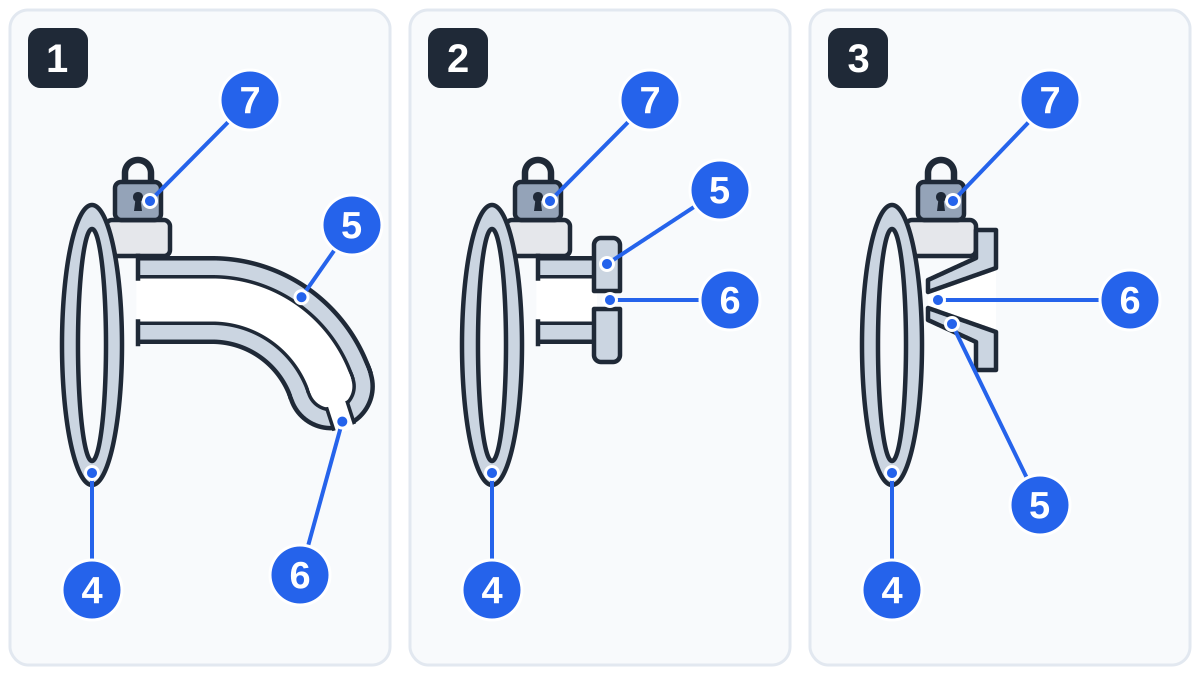
Appearance often matters in sissy play: some people want a pink finish, a very short cage, or a flat or inverted shape for the look it creates. Fit matters more. A device that looks right but pinches, rubs or cannot be removed quickly is the wrong device.
| Design | What it looks like | What to check |
|---|---|---|
| Standard (curved tube) | A tube that extends from the base ring and curves downward | Usable internal length and width, openings, weight and how the ring and tube join |
| Flat | A short cage closed by a flat front plate instead of a projecting tube | Pressure across the plate, where the opening sits and how urine is directed |
| Inverted (inward) | A short tube that recedes back toward the ring, giving an inward look | Inward pressure, contact points, cleaning access and removal |
| Short, nub or micro | Very short tubes sold for a minimal look | These are marketing names, not sizes; compare internal dimensions |
Read more about inverted chastity cages and flat chastity cages, or compare every design in our guide to the types of chastity cages.
Size for fit, not for looks
A smaller cage is not a goal or a training milestone. Choose dimensions that fit without compressing tissue, and never size down to look smaller or to make escape harder. Manufacturers measure differently, so ask whether a listed length is internal or external and how the ring is measured.
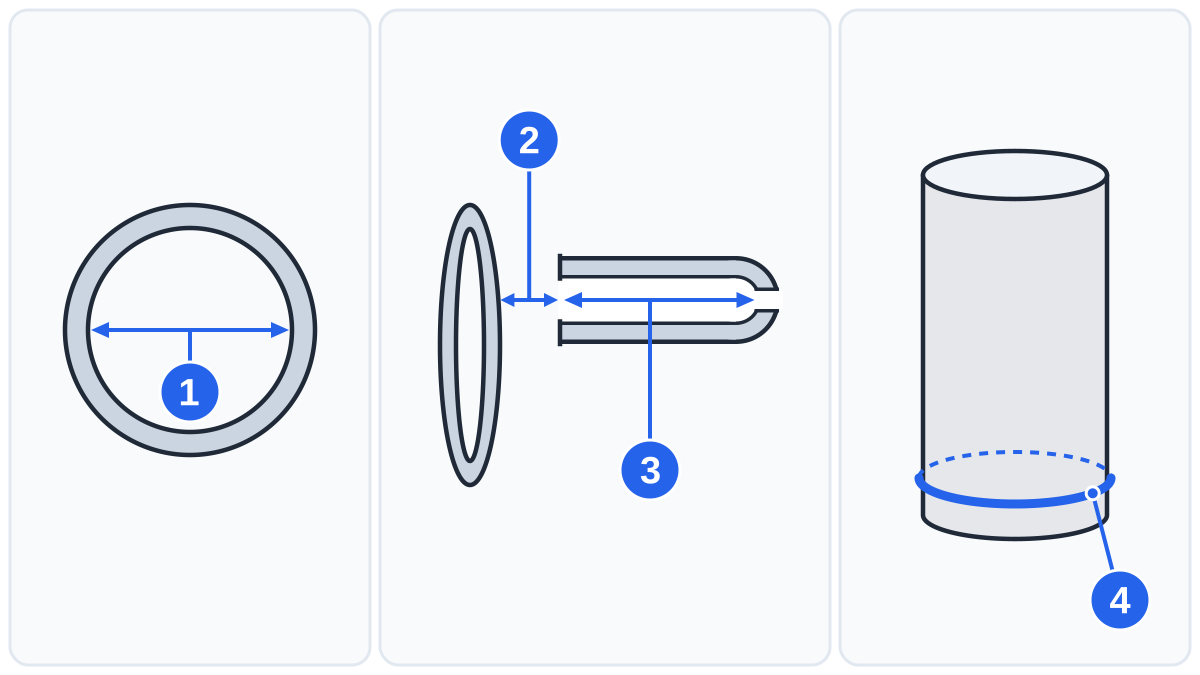
Our sizing guide explains what to ask a maker before you buy. Measurements help you compare designs; they cannot prove that a device is safe to wear.
Materials and colour
Metal, silicone, resin and 3D-printed devices differ in weight, rigidity, surface finish and cleaning needs. A pink coating, or a label such as "medical grade" or "bio-resin", does not establish quality, skin compatibility or safe wear. Compare the finished product and its instructions using our materials comparison.
Before a first trial, follow our step-by-step guide to putting on a chastity cage and practise opening the lock away from your body.
Safety: warning signs and when to get help
A 2026 expert-opinion article in The Journal of Sexual Medicine notes that male chastity devices "have not been evaluated in clinical or epidemiologic studies" (Wang and Raad, 2026), so there is no evidence-based safe way or length of time to wear one. What the medical literature does contain are case reports of constricting rings and devices. A review of those reports calls penile incarceration a urologic emergency and warns that failure to remove a constricting device "can lead to significant ischemia and loss of tissue" (Silberstein et al., 2008). Ischemia means the tissue is not getting enough blood.
Any pain, numbness, tingling, coldness, swelling or change in skin colour is a reason to take the device off promptly, not to wait and see.
Get emergency help (call your local emergency number or go to an emergency department; in the UK, 999 or A&E) if:
- the device is stuck, or swelling stops you removing it;
- you have sudden, severe pain in a testicle, or testicle pain that has lasted more than an hour or continues when you are resting (NHS: testicle pain);
- an erection lasts more than 3 to 4 hours, or more than 1 hour if you have sickle cell disease (NHS: priapism);
- your foreskin is pulled back and cannot return over the end of the penis (NHS: phimosis and paraphimosis).
Take the device off, leave it off and see a doctor (a GP in the UK) or a sexual health clinic if the head of the penis is red, sore, itchy or swollen, it hurts to urinate or there is discharge (NHS: balanitis), or if skin is broken or keeps getting irritated.
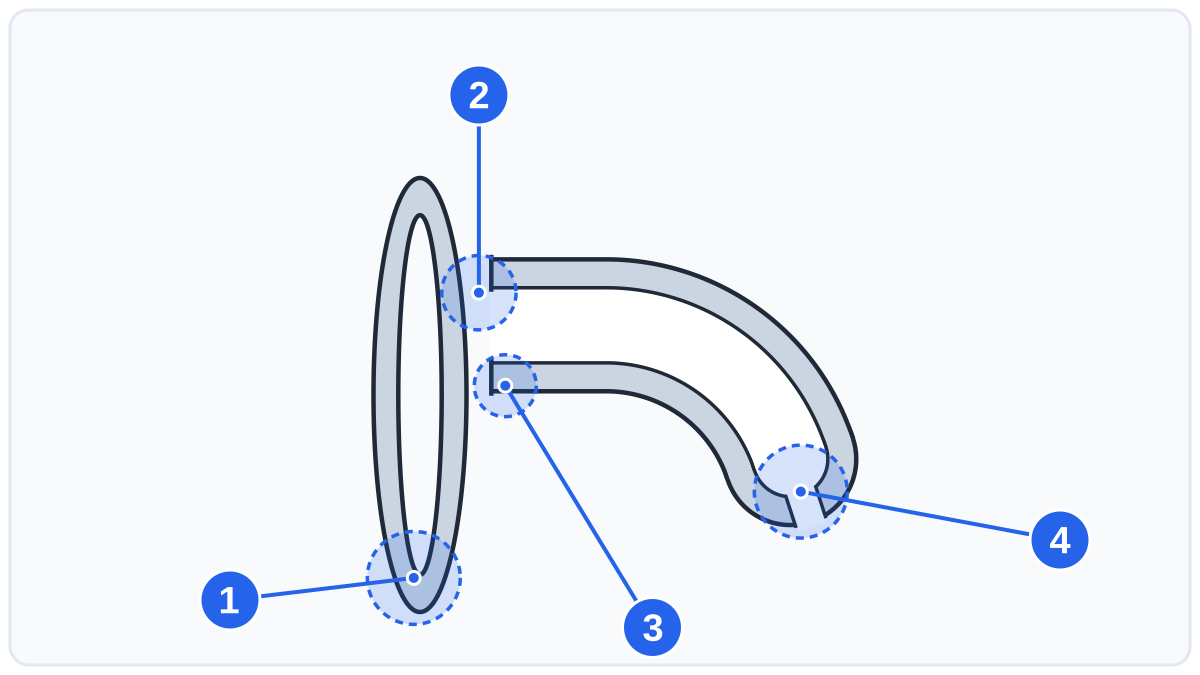
Check these areas every time the device comes off. Where pressure falls depends on the exact design and fit, which is why a different device can solve a problem that tightening it or "getting used to it" will not. Keep the key within the wearer's immediate reach and take off a device that hurts or wakes you at night; this guide does not recommend overnight or continuous wear. If you have a condition that affects circulation or sensation, ask a clinician before trying a device. Never try to cut rigid metal near skin yourself; get medical help instead.
Read our guide to chastity cage risks and long-term effects and our safety checklist before you start.
Hygiene and skin care
Take the device off to wash, dry and look at the covered skin; rinsing through the gaps of a cage is not the same. Clean the device itself as its maker instructs, because the right method depends on the material and on any electronics.
For the skin, NHS self-care advice for balanitis (a sore, swollen head of the penis) is to wash every day using just water or an emollient, gently pull back the foreskin (if you have one) to wash underneath with warm water, dry gently and avoid soap or shower gel (NHS: balanitis). Return the foreskin to its normal position afterwards: a foreskin that stays stuck behind the head of the penis is an emergency (NHS: phimosis and paraphimosis). Leave the device off while skin is sore.
Our hygiene guide separates skin care from device cleaning, and our guide to using the toilet in a chastity cage covers urination.
Identity, feminization and feelings
For some people feminization is playful dress-up; for others it touches something deeper about how they see themselves. Both are fine, and you can explore at your own pace and in private. Clothing, makeup, a chosen name and mannerisms are all optional parts of the role.
Enjoying a sissy role does not by itself say anything about your sexual orientation or gender identity. Sometimes, though, the play raises real questions. The NHS describes gender dysphoria as feeling "distressed or uncomfortable for a long time because the gender you feel you are (your gender identity) is different to your sex registered at birth", and suggests seeing a GP (family doctor) if you think that applies to you (NHS: gender dysphoria).
Some sissy arrangements include teasing or humiliation themes. If you include them, agree the specific words and topics that are off-limits, keep them inside the scene, and talk afterwards about how they felt. Play that leaves someone feeling ashamed or worthless outside the scene, or worse about their body over time, is a reason to change it.
If you worry that the interest itself means something is wrong with you, research offers some reassurance. A large national survey in Australia found that people who had engaged in BDSM were not significantly more likely to be unhappy or anxious, and concluded that BDSM is "simply a sexual interest or subculture attractive to a minority" (Richters et al., 2008). If the interest causes you distress, a counsellor or sex therapist who is comfortable with kink can help you think it through.
Daily practice, training and permanent chastity
"Training" is a common word in sissy chastity. A safe version means building an arrangement step by step: talking, trying a device briefly while awake, and reviewing what happened. It never means training yourself to ignore pain or moving to ever smaller cages. Our 30-day sissy chastity training plan sets out a month of conversations, device research and review, with no wearing-time targets.
Day-to-day rituals do not have to involve wearing a device at all. A short check-in message, a journal entry, chosen clothing at home or an agreed household task can carry the role on days when the device stays off.
Some couples call their arrangement permanent chastity. In practice that should mean an ongoing agreement, not uninterrupted wear: removal for washing, discomfort, medical care or a change of mind must stay available. Some people do wear devices for months or years, but the expert-opinion article cited above notes that these devices have not been studied and describes their possible effects on prostate and testicular health only as hypotheses (Wang and Raad, 2026). Read our guide to permanent chastity before agreeing to anything long-term.
When to pause or stop
Pause, or change the arrangement, if:
- any warning sign from the safety section appears;
- either person feels unable to say no, or keeps going out of guilt;
- the role starts to spill into everyday disrespect, work or relationships with people who did not agree;
- the wearer feels persistently low, anxious or ashamed after play;
- it has stopped being enjoyable for either of you.
Stopping is not a failure. A good arrangement is one that both people can leave.
Frequently asked questions
Is sissy chastity safe?
Nobody can promise a safe way or length of time to wear a chastity device, because the devices have not been clinically studied. Most of what is known about serious injury comes from case reports of constricting rings and devices. Choose a device that fits, keep removal within reach and stop at the first warning sign.
Do I need a keyholder?
No. Some people practise alone and hold their own key. Keep it where you can reach it immediately: a key frozen in ice, posted away or locked behind a timer is not immediate access. Be cautious with strangers online who offer to hold a key.
Does sissy chastity mean I am gay or transgender?
Not by itself. An interest in sissy play does not determine sexual orientation or gender identity. If the play raises questions about your gender identity that cause distress, a doctor (a GP in the UK) can talk through the support available.
How long can you wear a chastity cage?
There is no evidence-based answer, and this guide sets no target and does not recommend overnight or continuous wear. Take the device off for washing and skin checks and whenever it hurts or disturbs sleep, and read our risks guide before any longer arrangement.
What is the best cage for sissy chastity?
The one that fits your body, can be cleaned properly and comes off quickly. Colour, shape and size are aesthetic choices; compare internal dimensions with our sizing guide.
Can a keyholder refuse to unlock me?
Within play, a keyholder can decide when the device comes off for release, if you both agreed to that. A keyholder must never refuse removal for pain, swelling, hygiene, a medical need or a change of mind.
This guide is general information for adults, not medical advice.