
Femdom chastity is a consensual arrangement in which the submissive partner wears a locking chastity cage and the dominant woman holds the key, deciding within agreed limits when it comes off. What matters most is not the device but the agreement around it: limits set in advance, regular check-ins, and an emergency release the wearer can always reach.
This guide covers the relationship side. For the device itself, see types of chastity cages and how to put on a chastity cage.
What femdom chastity involves
Femdom (female domination) describes a consensual power exchange in which a woman takes the lead and her partner agrees to follow. In chastity play, part of that lead is control over when the wearer can be sexually active, backed up by a locked device and the key that goes with it.
- Keyholder: holds the key, or controls the lock, and makes day-to-day decisions within the agreement.
- Wearer: wears the device, follows the agreed rules and keeps the right to stop at any time.
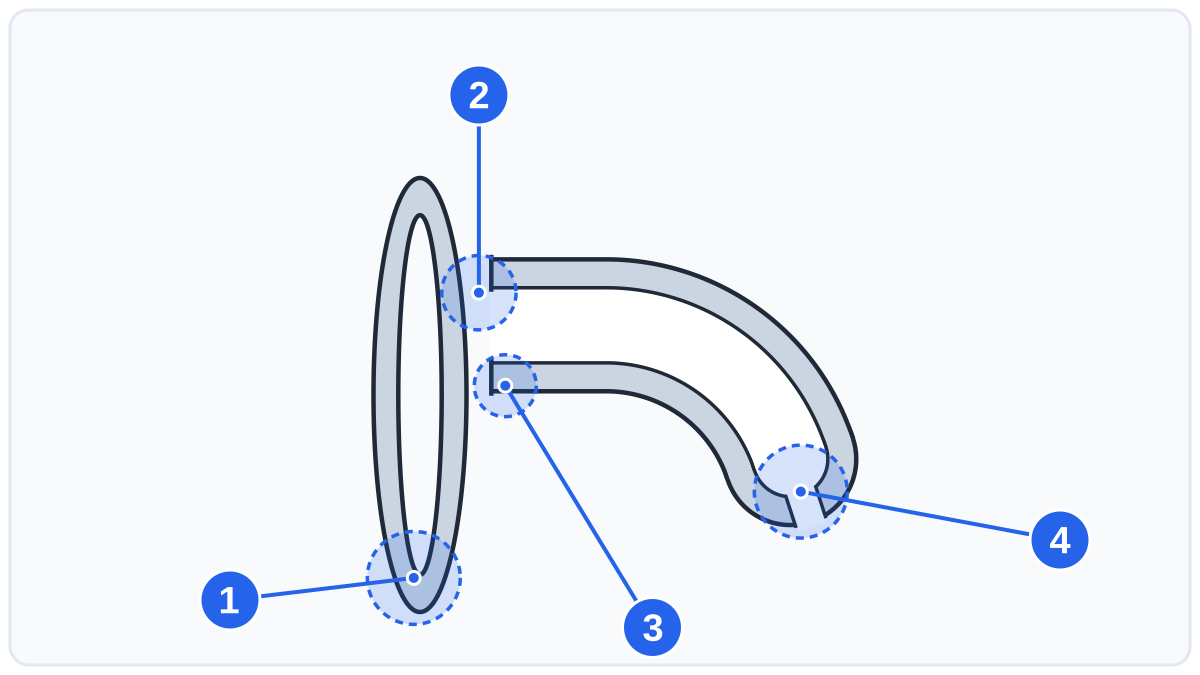
- Device: most cages combine a base ring with a cover or tube, joined by a lock. Shapes, materials and fit vary widely.
Couples use chastity in very different ways. Some keep it to occasional evenings; others build it into everyday routines. It overlaps with orgasm control, and some couples add other elements, such as feminization (see our sissy chastity guide), or try longer-term arrangements. There is no single "real" version; the right one is the version you both keep choosing.
There is little medical research on chastity devices themselves: a 2026 expert-opinion article in The Journal of Sexual Medicine notes that male chastity devices "have not been evaluated in clinical or epidemiologic studies" (Wang and Raad, 2026). Research on BDSM more broadly is reassuring about the people involved. In an online survey of 902 practitioners and 434 controls, practitioners scored more favourably on most measures, including well-being, and the authors suggested BDSM "may be thought of as a recreational leisure" rather than a sign of psychological problems (Wismeijer and van Assen, 2013).
Why couples try it, and what it cannot fix
The same article lists reasons people use these devices, including "sexual satisfaction, consensual power exchange relationships, and gender affirmation" for transgender and gender-diverse people. In a femdom relationship, the device serves the dynamic: one partner chooses to hand over a measure of control, and the other agrees to hold it and take responsibility for it. Our guide to chastity cage effects looks at what people report feeling while locked.
Chastity will not create trust that is not already there, settle an unrelated argument, or make an uninterested partner interested. If one of you is keen and the other unsure, talk about what appeals without asking for a decision, and accept a no. Holding the key is real work, and a partner who does not want it should be able to decline without that becoming a test of the relationship. A simple agreement with no device is a low-pressure way to see how the dynamic feels.
Agree the terms before anyone is locked
Consent is the foundation. Rape Crisis England & Wales describes consent as everyone involved agreeing "to take part by choice", with "the freedom and capacity to make that choice", and stresses that we all have "the right to change our minds at any time". Two points matter especially for chastity: agreeing to one thing is not agreeing to everything, and consent is "not like a permit or voucher" that can be cashed in later (Rape Crisis).
Before the first session, talk through and agree:
- What each of you wants from it, and what worries you.
- What is included: wearing the device only, or also orgasm control, tasks or other rules. Name the hard limits too.
- When and where: at home only at first, for example, and not during work, sport, travel or medical appointments unless planned.
- Length and review: a first session you both expect to be short, and a date to review how it went. Avoid open-ended starts.
- How to stop: a safeword or signal. When it is used, the device comes off, there is no penalty, and you talk later.
- Emergency access: where the spare key is kept and how the wearer reaches it (see below).
- Health: anything either of you thinks might matter. If in doubt, ask a doctor first.
- Privacy: who, if anyone, knows; whether photos or messages are exchanged; and what happens to them if you split up.
- Other people: how this affects any other partners. Friends, family and the public have not agreed to take part, so keep them out of it.
- Rewards and consequences: if you use them, cap them inside your limits, and never extend lock time because someone raised a health concern or used the safeword.
Some couples write this down as a chastity "contract". A written agreement is a useful record of what you agreed, but it does not lock in consent: either of you can still pause or stop at any time. In the moment, a simple traffic-light system helps: green means all is well, yellow means something needs attention or a conversation, and red means stop now and unlock.
Who does what: keyholder and wearer
The keyholder's authority is real, but it is borrowed: it exists because the wearer agreed to it, and it ends if that agreement is withdrawn. Holding the key is a responsibility as much as a privilege.
| Stage | Keyholder | Wearer |
|---|---|---|
| Before | Learns how the device fits, locks and comes off. Agrees the limits. | Gets the size right and practises fitting and removal. Says clearly what is off-limits. |
| During | Checks in at the agreed times, stays reachable and respects the limits. | Reports discomfort early, keeps up with hygiene and uses the stop signal when needed. |
| In an emergency | Unlocks straight away when asked, without argument. | Uses the spare key if the keyholder cannot be reached, and says so afterwards. |
| Afterwards | Makes time for aftercare and a debrief. | Is honest about what worked and what did not. |
Some couples mark locking and unlocking with a small ritual, or the keyholder wears the key on a chain as a reminder. Touches like these are optional; the safety basics are not. For fit, see our sizing guide.
Keyholding logistics: keys, spares and emergency release
Plan for things going wrong before anyone is locked: keyholders fall ill, travel and lose keys, and a device can become hard to remove once swelling starts. A clinical reference article on trapped penile rings describes swelling that can "prevent their removal" and says such cases "must be dealt with promptly" (StatPearls, 2023). Plastic rings can usually be cut off; thick metal ones are much harder, and case reports and a review of published cases describe removal with pliers, heavy-duty cutters and wire saws (Acharya et al., 2022; Campbell et al., 2024). These reports concern rings rather than chastity devices, but chastity cages often include a base ring too (Wang and Raad, 2026), so the same planning applies.
| Arrangement | How it works | Emergency access | Agree in advance |
|---|---|---|---|
| Keyholder's key plus a sealed spare | The keyholder keeps the main key; a spare sits in a numbered seal or sealed envelope within the wearer's reach. | Immediate: the wearer breaks the seal. | Using the spare for a health or safety reason is never "cheating". Reseal it and tell the keyholder. |
| Keyholder holds the only key | The wearer cannot remove the device alone. | Only when the keyholder is present and reachable. | Not advisable: illness, travel or a lost key can leave the wearer stuck. |
| Timer lockbox | The key is locked in a box that opens at a set time. | Only if the box has an emergency override you have tested. | What happens if the battery fails or the key is needed early. |
| App-controlled lock | A phone app opens the lock, sometimes from far away. | Depends on the app, batteries, signal and the maker's servers. | Where the mechanical backup release is, and what data the app collects. |
App-controlled locks need particular care. In 2020, security researchers at Pen Test Partners reported flaws in one connected chastity device that could let remote attackers stop the lock from opening, leaving wearers locked in. They noted there was "no emergency override function", so getting free could take "an angle grinder or other suitable heavy tool", and that the system exposed users' names, phone numbers, locations and passwords. The device's distributor later said the problems had been resolved, but the lesson stands: never depend on a single electronic lock without a tested mechanical release.
Both partners should know how to fit and remove the device (see how to put on a chastity cage). Keep the spare where the wearer can reach it quickly, including when travelling. If a device will not come off, do not force it or keep pulling against swollen tissue; go to an emergency department (A&E in the UK).
Check-ins: body, mood and the relationship
Agree when you will check in, and keep to it even when everything seems fine. Three kinds of check-in cover most of what matters:
- Quick check, during any session: is there pain, pinching, numbness or anything worrying? Is the wearer still happy to continue?
- Physical check, with the device off: look at the skin under and around the ring and cage for redness, rubbing, broken skin, swelling or colour change, then wash and dry. NHS advice for people with irritation of the head of the penis (balanitis) is to wash with "just water or an emollient", not soap or shower gel, to "dry gently", and to see a doctor (a GP in the UK) or a sexual health clinic if the head of the penis is swollen, itchy, sore or red (NHS). Our hygiene guide covers cleaning the device.
- Relationship check, at the review dates you agreed: is this still something you both want? Has anything started to feel like pressure? Does a rule need to change?
Warning signs: unlock straight away
Agree in advance that any of the following means the device comes off at once, whatever the agreement says:
- pain, as opposed to simple awareness of the device
- swelling, or the device feeling tighter than before
- numbness, tingling or pins and needles
- skin that looks pale, dark or blue, or feels cold
- broken skin, bleeding or a rash that is getting worse
- difficulty or pain when urinating
- any testicle pain
The same clinical reference describes a trapped penile ring leaving the penis "swollen, ischemic, and painful", meaning short of blood supply (StatPearls, 2023). Hospital advice for other rigid devices points the same way: an NHS trust tells people in plaster casts to seek immediate help if their fingers or toes "appear blue, white, swollen, painful, numb, cold" or the pins and needles continue (Buckinghamshire Healthcare NHS Trust).
For testicle pain, the NHS advises getting emergency care straight away (at an emergency department, called A&E in the UK, or by calling your local emergency number) for "sudden, severe pain in a testicle", for testicle pain with nausea, vomiting or abdominal pain, or for testicle pain that "has lasted more than an hour or continues when you're resting". Sudden, severe pain can be caused by a twisted testicle (testicular torsion), which "can lead to the loss of the testicle if it's not treated quickly" (NHS).
Do not let embarrassment slow you down. A 2025 case report and literature review notes that delays in getting care for a trapped penile object are often caused by embarrassment, among other reasons, and that such delays can worsen outcomes (Afrianto et al., 2025). The keyholder's most important job here is to make unlocking easy: no debate, no "punishment" and no teasing about it afterwards.
No safe wearing time has been established for chastity devices, and this guide does not recommend overnight or continuous wear. Our guide to chastity cage risks and long-term effects sets out what the evidence does and does not show.
Aftercare and debriefing
Aftercare is the time you set aside after a session, or when a longer locked period ends, to look after each other: a skin check, washing, rest, something to eat or drink, and time to reconnect. Later, when you are both calm, debrief:
- What did each of you enjoy?
- Was anything uncomfortable, physically or emotionally?
- Did the check-ins happen as agreed, and did the stop signal feel easy to use?
- What, if anything, should change before next time?
How the experience goes seems to matter. In two small studies of 58 people who practise consensual sadomasochism (SM), measured before and after a scene, those who said it went well showed falls in the stress hormone cortisol and rises in relationship closeness; among those who said it went poorly, some felt less close and others closer (Sagarin et al., 2009). The research did not look at chastity, but it is a good reason to take debriefs seriously. If either of you feels low, anxious or unsettled afterwards, treat it as something to talk about, not as a failure.
Long-distance and online keyholding
Keyholding at a distance can work, but the physical rules do not change: the wearer must still be able to get out quickly without help.
- Keep a sealed spare key with the wearer. The keyholder can ask for the seal number at check-ins.
- Messages and video calls do not replace the wearer's own judgement about pain or swelling.
- Photos sent as "proof" are intimate images. Agree what is shared, how it is stored and what happens to it if the arrangement ends, and leave out faces and other identifying details.
- Be cautious about strangers offering to keyhold online. You cannot verify who they are, so never give someone you do not know your only key or images that identify you.
If you are worried that intimate images of you will be shared without your consent, StopNCII.org, run by the not-for-profit charity SWGfL, offers a free tool that creates digital fingerprints ("hashes") of the images on your own device. Participating platforms look for matches and can remove them under their intimate-image abuse policies; the images themselves never leave your device.
When to pause, renegotiate or stop
Either of you can pause or end the arrangement at any time, without having to justify it. Signs that it is time to talk, or to stop:
- One of you feels pressured to continue, or agreed mainly to keep the other happy.
- Rules are being bent or ignored, or check-ins keep slipping.
- The wearer hides discomfort to avoid disappointing the keyholder.
- The keyholder feels burdened by, or resentful about, the role.
- Feelings such as shame or loss of confidence carry on after sessions instead of staying part of the play.
- Lock time is being used to settle real arguments.
- Health changes, or skin problems that keep coming back.
If chastity is being imposed rather than chosen, it is no longer consensual play. As Rape Crisis puts it, being "forced, pressured, bullied, manipulated, tricked or scared takes away our freedom and capacity to make choices". Specialist sexual-violence support services can help, such as Rape Crisis in England and Wales or RAINN in the US.
Long-term or "permanent" arrangements raise the same questions with higher stakes; read our guide to permanent chastity before considering one.
Frequently asked questions
Should the wearer have a spare key?
Yes. The wearer should always be able to remove the device quickly without help. A spare kept in a numbered seal lets the keyholder see whether it has been used, without leaving the wearer stuck.
How long can someone stay locked?
Nobody knows what is safe, because chastity devices have not been evaluated in clinical or population studies. Start with short sessions while you are together and awake, unlock at any warning sign, and do not treat longer wear as a goal.
Is a chastity contract binding?
No. A written agreement records what you agreed, but consent is not a permit that can be used later: either partner can withdraw it at any time.
What if my partner does not want to be a keyholder?
Then the answer is no, at least for now. Explain once, without pressure, what appeals to you, and let it rest. The arrangement only works if both of you want it.
Can a keyholder live far away?
Yes, if the wearer keeps a sealed spare, you agree regular check-ins by message or call, and you settle how photos and messages are handled. Be wary of app-only locks and of strangers offering to keyhold online.
This guide is general information for adults, not medical advice.