
Edging is the practice of building sexual arousal until you are close to orgasm, then slowing down or stopping before the point of no return, letting the urge settle and starting again. People do it alone or with a partner to make arousal last longer, to learn their own signals or as part of consensual orgasm-control play.
What does edging mean?
The "edge" is the moment just before orgasm. In men, clinicians call it the point of ejaculatory inevitability. Voluntary control over emission, the first phase of ejaculation, fades progressively until this point is reached (McMahon, Indian Journal of Urology, 2007), and there is no evidence that voluntary control plays a role in the expulsion phase that follows (Alwaal, Breyer and Lue, Fertility and Sterility, 2015). Edging means approaching that point repeatedly without crossing it.
The idea is older than the slang word. A 1956 paper by J. H. Semans described a "stop-start" approach to premature ejaculation, which Masters and Johnson later modified (Xin et al., Asian Journal of Andrology, 2011) into the squeeze technique (McMahon, 2007). Psychosexual therapists still teach both techniques (NHS: ejaculation problems). Edging uses the same pattern for a different purpose: pleasure, anticipation or play rather than treatment.
Orgasm and ejaculation are separate physiological processes, even though they can be hard to tell apart (Alwaal et al., 2015). That is how a "ruined" orgasm is possible: ejaculation happens with little of the usual pleasure. When a partner sets the pace, edging is often called "tease and denial", and it is one of several tools used in orgasm control. Edging is not limited to men; this guide describes the male response because ChastityTek writes about male chastity.
Edging, orgasm denial and ruined orgasms compared
These terms are often mixed up. The differences are how a session ends and who decides.
| Practice | What happens | Does it end in orgasm? | Who sets the pace |
|---|---|---|---|
| Edging | Arousal is brought close to the point of no return, eased off, then built up again, usually several times | Optional; decided at the end | You, or a partner by agreement |
| Stop-start technique | The same pattern, used in sex therapy to build control over ejaculation | Yes; the aim is to delay it, not avoid it | You or a partner, often guided by a therapist |
| Orgasm denial | Orgasm is deliberately not allowed, for one session or a longer agreed period | No, for the agreed period | Usually a partner, by agreement |
| Ruined orgasm | Stimulation stops at the point of no return, so ejaculation happens with little of the usual pleasure | Ejaculation without a full orgasm | Usually a partner, by agreement |
| Chastity play | A locked device limits touch and erection; when it comes off is part of the agreement | Depends on the agreement | Wearer and keyholder together |
Our guide to ruined orgasms explains that practice in more detail.
How edging is practised
Edging is easy to describe. The skill is noticing your own signals in time. A solo session usually follows this pattern:
- Choose a private time when you are not rushed and are unlikely to be interrupted.
- Build arousal gradually and notice how it rises: your breathing, muscle tension and the growing urge to finish. Some people rate it on a scale of 1 to 10.
- When you feel close, but before the point of no return, stop or ease off.
- Use the pause to breathe slowly and wait until the urge fades.
- Start again, and repeat for as many rounds as feel comfortable.
- Decide how to end: with an orgasm, or by simply stopping.
This is close to the stop-go technique the NHS describes for premature ejaculation, in which you stop before the point of ejaculation and, once you feel more confident about delaying it, try stopping and starting during sex as required (NHS). Going past the edge by accident is part of learning where it is.
Long sessions mean a lot of friction. Lubricant adds slipperiness and comfort. Water-based and silicone-based lubricants are safe with all condoms, but oil-based ones can thin condoms and make them more likely to split. Silicone-based lubricant should not be used with silicone toys because it can degrade them over time (Sexual Health Oxfordshire, an NHS service). Stop if your skin gets sore.
With a partner the pattern is the same, but the person being edged needs a clear way to say "slow down" or "stop" at any moment (see the consent section below).
Claimed benefits and effects: what the evidence shows
Edging has barely been studied as a pleasure practice. As of October 2026, only one paper on PubMed uses the word "edging" in a sexual sense in its title or abstract (it appears in the table below). Most claims about edging rest on personal accounts or on research into related techniques.
| Claim | What the evidence shows |
|---|---|
| It makes orgasms stronger | We found no study that has measured this. The claim rests on personal accounts, and experiences vary. |
| It helps you last longer | The closest evidence is for the stop-start and squeeze techniques used for premature ejaculation. A systematic review of ten randomised trials found limited evidence that these techniques improve ejaculation time and other outcomes compared with a waiting list, and that combining them with medication works better than medication alone (Cooper et al., 2015). An earlier Cochrane review described the evidence for psychological treatments as "weak and inconsistent" (Melnik et al., 2011). Short-term results can be good, but convincing long-term data are lacking (McMahon, 2007). |
| It teaches you your body's signals | Plausible, and it is the theory behind the stop-start technique: that early ejaculation happens when a man does not pay enough attention to rising sexual tension (McMahon, 2007). It has not been measured for edging as a pleasure practice. |
| It boosts testosterone | We found no study that measured hormones during edging. The claim usually borrows from research on abstinence. A 2003 study that reported a testosterone peak on the seventh day of abstinence was retracted in 2021 (PubMed record). A 2001 study of ten men found higher testosterone after three weeks of sexual abstinence, but it did not study edging or whether the change had any health effect (Exton et al., 2001). In the same study, orgasm itself did not change testosterone, and a similar laboratory study of ten men found no change during sexual arousal or orgasm (Krüger et al., 2003). See our guide to orgasm hormones. |
| It causes "blue balls" | It can. Healthy Male, an Australian Government-funded men's health organisation, describes blue balls (epididymal hypertension) as scrotal pain or heaviness after sustained arousal without orgasm and ejaculation. It says there is almost no research on it and that it is not dangerous (Healthy Male). Cleveland Clinic says the discomfort can usually be measured in minutes, rarely lingers for a few hours and has no lasting effects (Cleveland Clinic). |
| It can become compulsive | Little is known. A 2024 cross-sectional study of two samples of male pornography users (2,300 men in total) treated edging as one of several patterns of use; the authors concluded that their results were consistent with edging being one feature of problematic use (Ince et al., 2024). A survey of this kind shows an association, not that edging causes problems. |
| It makes it harder to finish with a partner | Not studied for edging. A clinical model of delayed ejaculation notes that many affected men have a solo technique that a partner cannot easily reproduce, and treatment often involves changing it (Perelman, 2016). If you notice this pattern, vary how you practise or talk to a sex therapist. |
Is edging safe?
We found no study of edging's safety. The testicular ache described above is temporary and not dangerous, and it eases with ejaculation or with non-arousing distraction (Healthy Male). If it does not go away or is bad enough to interfere with daily life, see a doctor (Cleveland Clinic).
Some symptoms are not a normal part of edging and need medical attention:
- Sudden, severe pain in a testicle, testicle pain with nausea, vomiting or stomach pain, or testicle pain that lasts more than an hour or continues at rest: go to an emergency department (A&E in the UK) or call your local emergency number straight away. Sudden severe pain can be caused by a twisted testicle (testicular torsion), which can lead to the loss of the testicle if it is not treated quickly (NHS: testicle pain).
- An erection that lasts more than 3 to 4 hours needs emergency treatment. This is priapism, which can cause permanent damage to the penis if not treated quickly. Some erectile dysfunction treatments can cause it, and sex or masturbation will not make it go away (NHS: priapism).
- A sore, red, swollen head of the penis: see a doctor or a sexual health clinic. Causes include irritation from soap, shower gel or condoms, and infections such as thrush or sexually transmitted infections (NHS: balanitis).
- A persistent problem with ejaculation, such as finishing much sooner or later than you want: see a doctor, who can discuss it, examine you or refer you to a specialist (NHS: ejaculation problems). Our guide to difficulty reaching orgasm covers common contributing factors.
Emotional effects matter too. Some people enjoy the frustration of waiting. If edging leaves you distressed or guilty, or starts to feel out of your control, take a break and consider talking to a doctor or a sex therapist.
Edging with a partner: consent and communication
When someone else controls the pace, edging becomes a form of power exchange. The same ground rules apply as for any consensual kink:
- Agree before you start what is included, what is off limits and how the session will end: with or without orgasm.
- Set a stop signal, for example "yellow" to slow down and "red" to stop at once, plus a gesture in case speaking is difficult.
- Either person can withdraw consent at any time, including halfway through a session or during an agreed period of denial.
- Check in during the session, and afterwards make time to rest and talk about what worked and what did not (often called aftercare).
- No pressure. Discomfort after arousal is never a reason to push a partner into sexual activity (Healthy Male; Cleveland Clinic).
Our guide to consent and boundaries in chastity play sets out a fuller framework for negotiating limits and reviewing them over time.
Edging and chastity play
Edging and chastity are often combined because both are about controlling when orgasm happens. The combination can take three forms:
- Edging before locking: a session ends without orgasm and the device goes on afterwards. A cage has to be fitted when the penis is not erect, so wait until arousal has fully subsided. Our step-by-step guide explains how to put on a chastity cage.
- Unlocked sessions: the keyholder removes the device for an agreed edging session, and the wearer is locked again afterwards.
- Teasing while locked: arousal without direct stimulation. A cage is designed to stop a full erection, so an erection presses against the tube and the ring. Pressure, pinching or pain is a signal to stop, not something to endure.
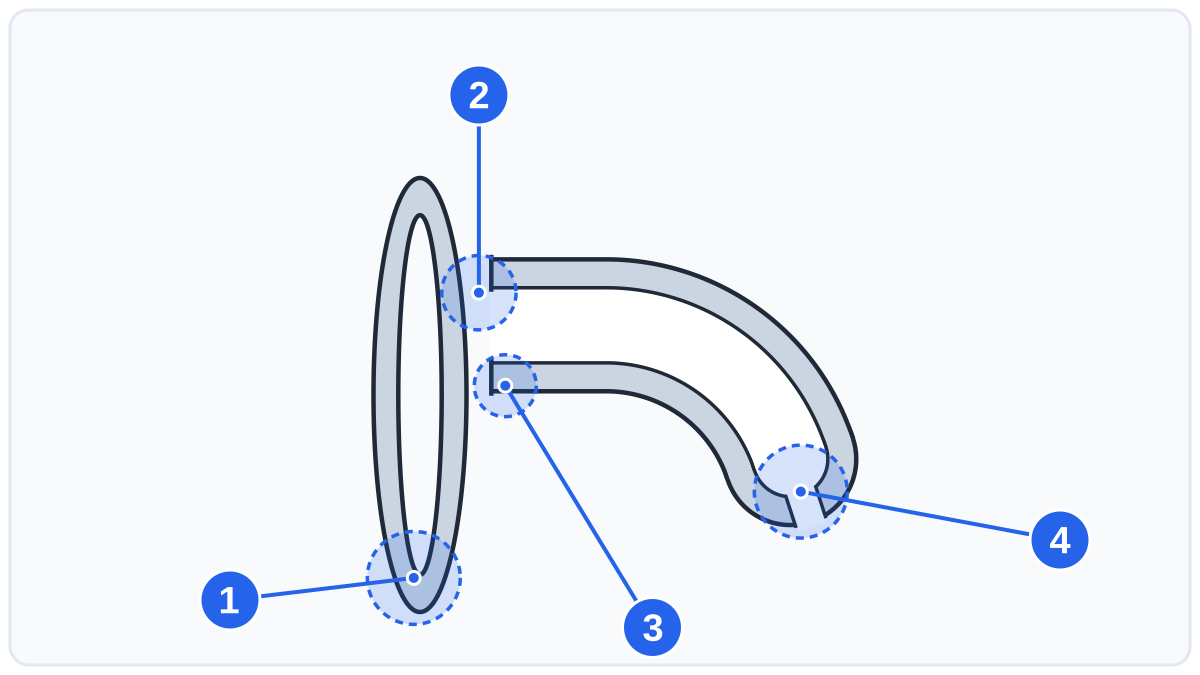
Pain, numbness, swelling or a change in colour mean the device should come off. If it will not come off, or the symptoms continue once it is off, get urgent medical help at an emergency department (A&E in the UK). In a review of 100 published cases in which an object had to be removed from around the penis, half were linked to sexual activity, more than a third involved metal rings and about a quarter reported after-effects following removal (Campbell et al., 2024). Chastity devices themselves "have not been evaluated in clinical or epidemiologic studies" (Wang and Raad, 2026); our guide to chastity cage risks and long-term effects sets out what the evidence does and does not show. For more on how couples combine the two practices, read why edging and chastity play go together.
ChastityTek is developing its own device, Veru One; it is not yet available to buy.
Frequently asked questions
Is edging bad for you?
Edging has barely been studied, so there is no good evidence either way. The ache some people feel in the testicles after a session without orgasm is temporary and not dangerous. Sudden severe testicle pain, or an erection lasting more than 3 to 4 hours, needs emergency care.
Can edging help with premature ejaculation?
Possibly. Psychosexual therapists teach the closely related stop-start technique, but reviews of the trials find only limited evidence that it works on its own, and long-term results are uncertain. If finishing too soon bothers you, a doctor can discuss other treatments.
Is edging the same as orgasm denial?
No. Edging means pausing before orgasm and starting again, and you can still choose to finish at the end. Orgasm denial means not having an orgasm for an agreed time, often with a partner deciding when it ends.
How long should an edging session last?
There is no evidence-based length. Stop when it is no longer comfortable or enjoyable, when your skin gets sore, or as soon as either partner wants to stop.
Can you edge while wearing a chastity cage?
A cage limits direct stimulation and prevents a full erection, so arousal while locked mostly means pressure against the device. Another option is to keep edging for agreed unlocked sessions. Pain, pinching or numbness means the device should come off.