
Put a chastity cage on while you are soft, clean and dry. Fit the base ring first, behind the testicles and around the base of the penis. Then guide the penis into the cage, join the cage to the ring and insert the lock. Check for pinching, pressure, colour change and easy urination before you rely on the fit.
Flat and inverted cages follow the same four steps, but the penis sits in a much shorter space, so alignment and loose skin matter more. Designs vary, so where your maker's instructions differ from this guide, follow them.
Standard, flat and inverted cages: what changes when you fit them
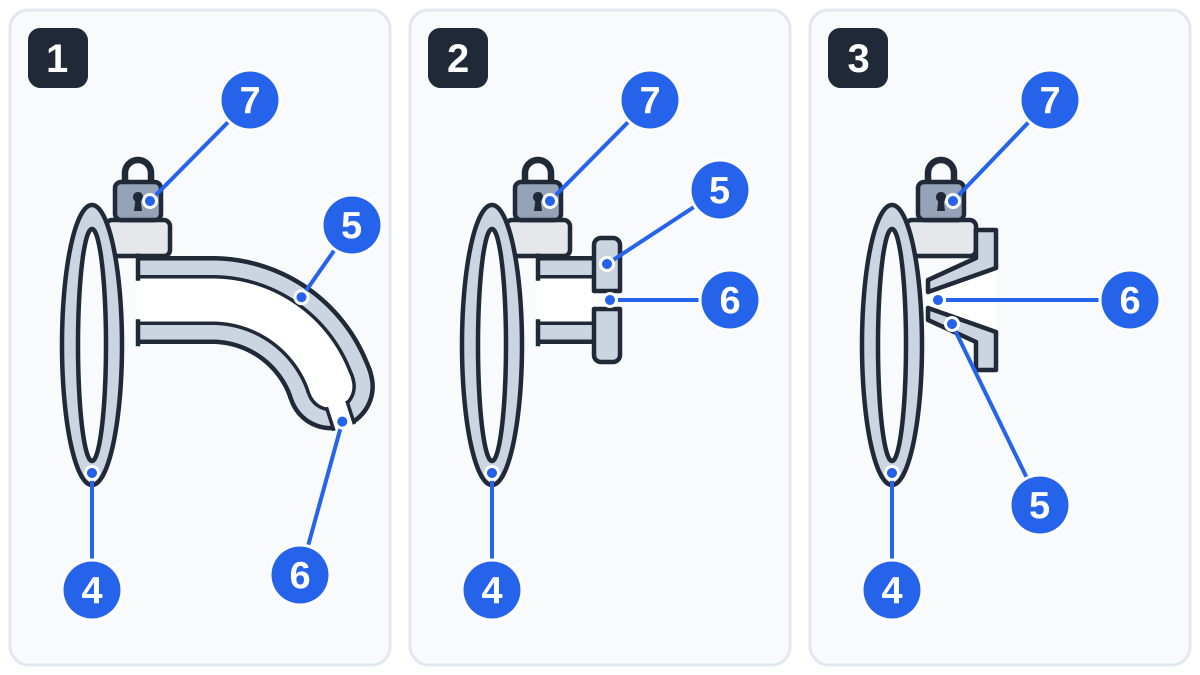
All three designs share a base ring and a lock. What differs is the space the penis sits in and where the opening for urine ends up.
| Design | Where the penis sits | What to line up | What to watch while fitting |
|---|---|---|---|
| Standard (curved) | In a tube that extends forward, often curving downward | The opening at the tip of the tube with the urethral opening | Skin caught in the gap where the cage meets the ring |
| Flat | In a short enclosure closed by a flat front plate | The hole in the front plate with the urethral opening | Loose skin bunching in the short space; the plate pressing on the head of the penis |
| Inverted (also sold as inward or negative) | In a short tube that recedes back toward the body | The opening, which sits closer to the body than on a standard tube | Tissue being pushed inward; pressure inside the recess |
Our overview of the types of chastity cages compares the designs in more detail.
Before you start: a checklist
- Confirm the size. Measure as your maker describes and compare with their chart; our sizing guide explains which dimensions matter. If a ring or cage only goes on with force, it is the wrong size, and no technique below fixes that.
- Check the device and the lock. Look for cracks, rough edges and sharp seams, and do not use damaged parts. Open and close the lock in your hand before the device touches your body.
- Keep the key within the wearer's reach. Have a spare key, or scissors that can cut a plastic seal. If a partner holds the key, agree beforehand that it is handed back immediately whenever the wearer asks.
- Wash and dry. Devon Sexual Health (NHS) advises using "just warm water or gentle soap", cleaning under the foreskin, not scrubbing and patting dry (genital hygiene advice). If the head of the penis is already red, swollen, itchy or sore, leave the device off: these can be symptoms of balanitis, which the NHS advises seeing a doctor (a GP in the UK) about.
- Trim rather than shave. Long hair can catch where the ring meets the cage, so trimming it short helps. Shaving has its own risks: the same Devon page warns that shaving the genital area "can cause damage to the delicate skin and may cause irritation or localised infections".
- Decide on lubricant. Lubricant is optional, but a little can help the ring slide over the skin. Use what your maker recommends for the device's material. When in doubt, choose water-based: an NHS sexual health service says water-based lubricants are "safe with all sex toys", while silicone-based (and some oil-based) ones "should not be used with silicone or realistic-feel toys as they can degrade the material over time" (NHS lubricant guide). By the same logic, avoid silicone-based lubricant on a silicone cage. Wipe off any excess.
- Be soft and relaxed. A cage cannot be fitted during an erection. One manufacturer's instruction sheet says to put its device on "while in a relaxed state" (CB-X fitting instructions, PDF). If an erection starts, stop and wait.
How to put on a standard chastity cage, step by step
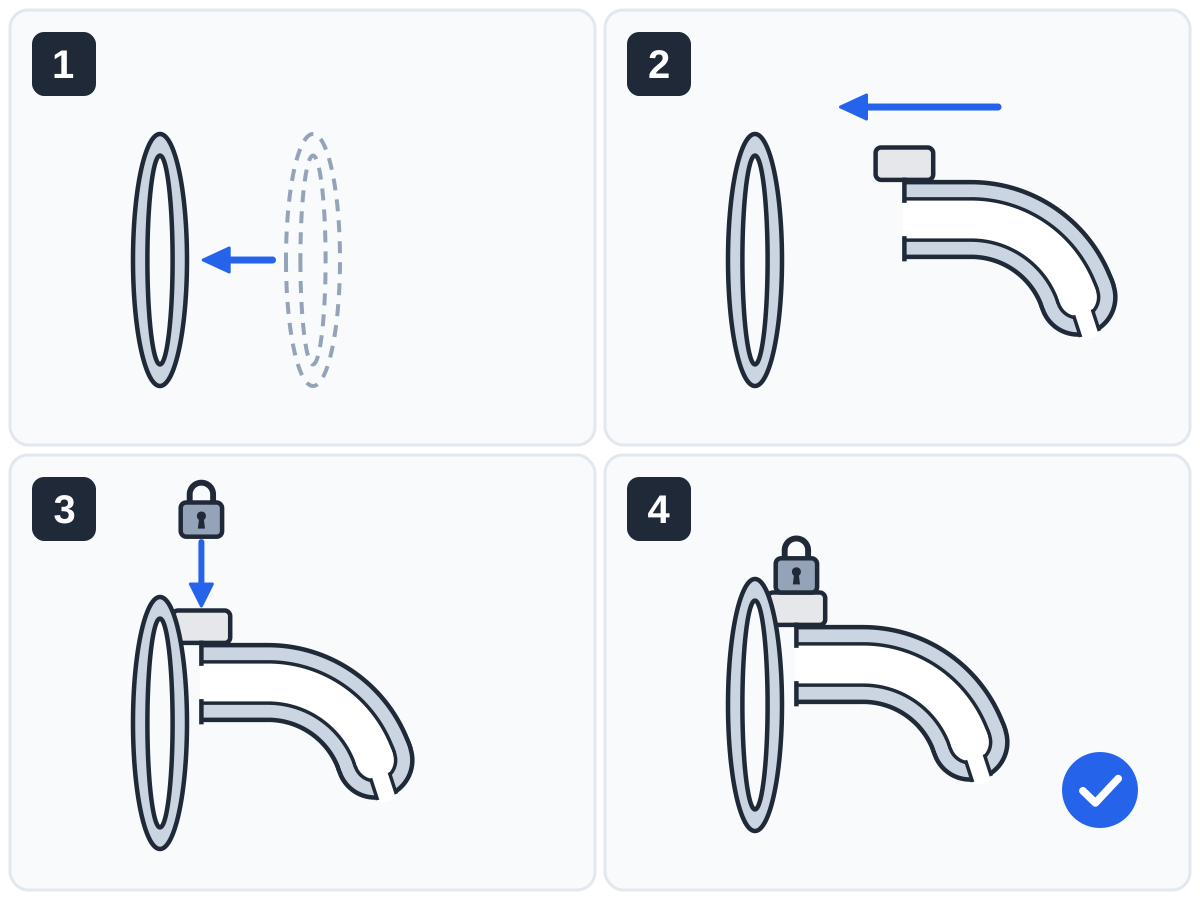
- Fit the base ring. A one-piece ring has to pass over the testicles and the penis: ease the testicles through one at a time, then the penis, so the ring sits close to the body, behind the testicles and around the base of the penis. A hinged or two-part ring opens and closes around the base instead. If your cage uses spacers or interchangeable pins to set the gap between the ring and the cage, fit the spacer now. The CB-X sheet describes the right fit as "snug, but not tight"; if the ring is a struggle to get on or feels tight, try the next size up rather than forcing it.
- Position the cage. If you have a foreskin, leave it in its usual position over the head of the penis. A foreskin that is pulled back and cannot return can leave the end of the penis "very swollen and painful", and the NHS treats this as an emergency (NHS: tight foreskin and paraphimosis). Point the penis downward and guide it into the tube until the opening at the tip lines up with the urethral opening.
- Align the ring and cage and insert the lock. Bring the cage back to the ring so the guide pins or locking post line up. Keep the penis pointing down while you do this; the CB-X sheet advises it "in order to avoid pinching when connecting the cage to the ring". Smooth any loose skin away from the gap before the two parts meet, then fit the padlock, built-in lock or numbered plastic seal. If anything pinches or presses, do not lock it: take the cage off and start again.
- Check the fit while you are still somewhere private, using the checks below.
The stocking method. If loose skin bunches inside the tube, the CB-X instructions describe a "stocking trick": cut the foot off a thin nylon stocking, thread the open end through the opening at the tip of the cage, place the penis in the stocking, slide the cage on, then slowly pull the stocking back out through the tip. Use it only to stop skin bunching, not to get into a cage that is too small.
How to put on a flat chastity cage
A flat cage holds the penis in a short enclosure closed by a flat front plate, with a hole in the plate for urine. There is far less room than in a tube, so the head of the penis has to line up with that hole, and loose skin has nowhere to go.
- Fit the base ring exactly as for a standard cage, with any spacer in place.
- Position the penis in the enclosure so the head faces the front plate and the urethral opening lines up with the hole in the plate. If the two do not line up, urine cannot pass cleanly through the plate.
- Align the cage with the ring and insert the lock. Before you lock it, check that no skin is folded at the edges of the plate or caught in the gap.
- Check the fit. The plate should rest in place without pressing hard on the head of the penis. If the cage only closes when the penis is compressed, it is too small or the design does not suit you.
Our flat chastity cage guide explains how the design works.
How to put on an inverted chastity cage
In an inverted cage, the short tube recedes back toward the body instead of extending forward, so the penis sits in a recess and the opening ends up closer to the body. Products sold as inverted, inward or negative differ in shape and depth, so read the maker's sheet for your model.
- Fit the base ring as for a standard cage.
- Guide the penis gently into the receding tube. It should settle into the recess without being forced. Line up the opening with the urethral opening.
- Align the cage with the ring and insert the lock, smoothing loose skin away from the gap first.
- Check the fit. Do not push tissue inward to make the cage close. If it only locks with pressure on the penis or testicles, it is the wrong size or the wrong design for you.
Our inverted chastity cage guide covers how the design works and who it may suit.
Check the fit straight away
Do the first check as soon as the cage is on, while you are awake, in private and with the key within reach. Sit, stand, walk and bend, because the fit can change as you move.
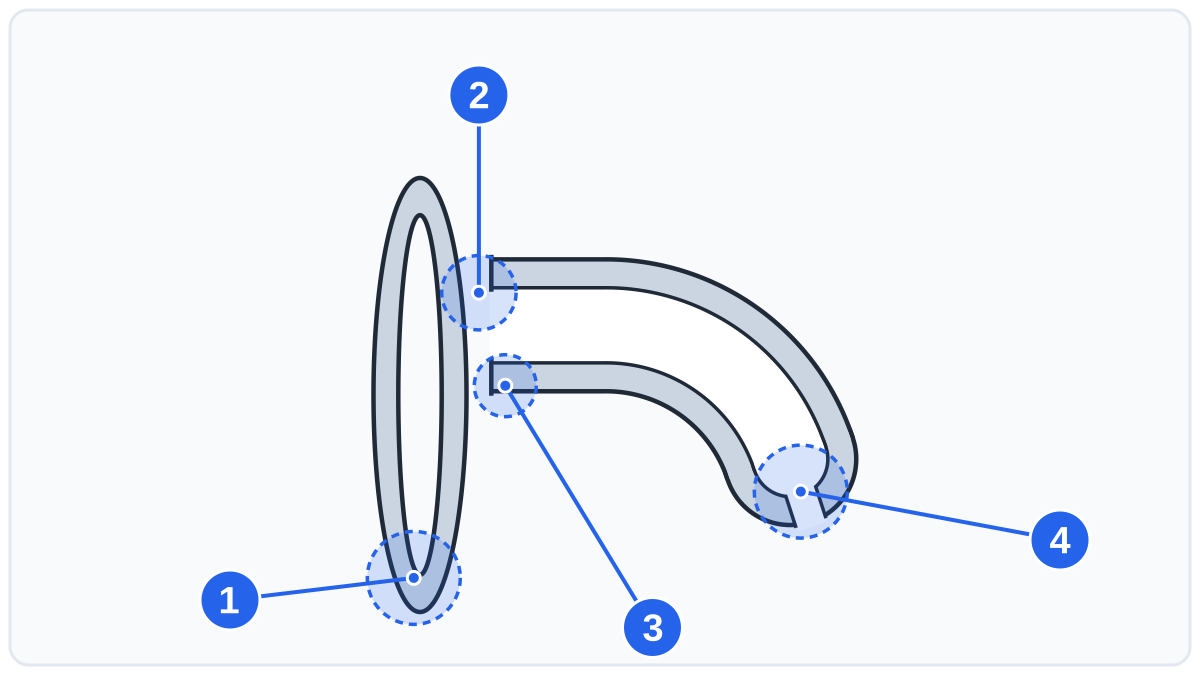
- There is no pinching at the ring edge or in the gap between the ring and the cage.
- The ring lies flat against the body without digging in.
- The skin looks its normal colour and feels its normal temperature, with no numbness or tingling.
- There is no swelling, and nothing feels as if it is getting tighter.
- You can urinate through the opening.
- If you have a foreskin, it is still in its usual position.
- The cage stays attached to the ring when you move.
Passing these checks tells you the cage went on correctly. It does not show that wearing it for longer is safe. A 2026 expert-opinion article in The Journal of Sexual Medicine notes that male chastity devices "have not been evaluated in clinical or epidemiologic studies" (Wang and Raad, 2026), so there is no evidence-based safe wearing time. Our guide to chastity cage risks and long-term effects sets out what is and is not known.
When to take it off straight away
Remove the cage at once if you notice:
- pain, pinching that returns after you reposition, or pressure that builds;
- numbness, tingling, coldness, swelling or an unusual colour change;
- difficulty urinating.
Numbness, swelling and difficulty urinating are among the problems described in case reports of trapped constriction rings: "decreased sensation" and "severe swelling" (Patel et al., 2018), and "urinary difficulty" with "evolving ischaemic changes" (Asim et al., 2026).
When to get emergency help
Go to an emergency department (A&E in the UK) or call your local emergency number if:
- the device will not come off, or swelling is stopping you from removing it (Patel et al., 2018);
- you have sudden, severe pain in a testicle, testicle pain with feeling or being sick or with abdominal pain, or testicle pain that has lasted more than an hour (NHS: testicle pain);
- the foreskin is pulled back and cannot return over the head of the penis (NHS: paraphimosis);
- an erection lasts more than 3 to 4 hours, or a painful erection lasts more than 1 hour if you have sickle cell disease (NHS: priapism).
How to take a chastity cage off quickly
Plan the removal before you lock the cage, not when you need it.
- Keep release immediate. The key, a spare key or scissors for a plastic seal should be where the wearer can reach them at once. Do not use timers, frozen keys or app locks that delay release.
- Rehearse once, unlocked. Practise the reverse order: lock out, cage off, then the ring. With a one-piece ring, bring the penis out first, then the testicles one at a time.
- If it will not come off, stop pulling. Do not try to cut metal near the skin. Go to an emergency department, tell the staff what the device is made of and how it locks, and bring the keys and the maker's instructions if you have them.
Swelling is what turns a tight ring into a trapped one. The closest evidence comes from case reports of metal rings worn at the base of the penis, where a cage's base ring sits: one ring that had been on for 24 hours had to be cut off with industrial bolt cutters, and a 74-year-old man with other serious health problems, whose ring had been on for more than 48 hours, died of sepsis despite prompt removal (Patel et al., 2018). In a 2026 report, a rigid metal ring on the shaft of the penis had caused early signs of tissue damage from restricted blood flow within about three hours and had to be removed surgically under general anaesthetic (Asim et al., 2026). These were not chastity cages, but they show why swelling should never be waited out.
Frequently asked questions
Can anyone wear a flat chastity cage?
Not everyone. A flat cage leaves very little room, so whether it fits depends on your anatomy and the cage's internal dimensions. If it only closes with force, or the plate presses hard on the head of the penis, it is not suitable for you; a design with more internal space may be.
Do you need lube to put on a chastity cage?
No, it is optional. Follow the maker's advice for the material. An NHS sexual health service says water-based lubricant is safe with all sex toys and that silicone-based lubricant can degrade silicone toys (NHS lubricant guide), so avoid silicone-based lubricant on a silicone cage. One maker of hard plastic cages recommends silicone lubricant for its devices (CB-X instructions).
How tight should the base ring be?
Snug, not tight. It should not slide off when you move, and it should not pinch, hurt or change the colour of the skin. No home check proves that longer wear is safe. Our sizing guide explains how ring sizes are measured.
Why does my chastity cage pinch?
Skin can get caught at the edge of the ring and in the gap where the cage meets the ring. On a standard cage, keep the penis pointing down as you join the parts; on any design, smooth loose skin away from the gap, trim long hair and check the spacer setting. If the pinching keeps coming back, the size or design is wrong for you, so take the cage off.
Can you pee in a flat or inverted chastity cage?
Yes, through the opening, as long as it lines up with the urethral opening. Sitting down lets the stream go straight into the toilet. Pat the skin dry afterwards and clean the cage regularly. Our guide to peeing in a chastity cage covers sitting or standing and drying, and our hygiene guide covers cleaning. If you cannot pass urine, take the cage off.
How long can you wear a flat or inverted chastity cage?
There is no evidence-based answer. Chastity devices have not been evaluated in clinical or epidemiological studies (Wang and Raad, 2026), so this guide does not give wearing times. Take the cage off at the first warning sign, and read our risks guide before planning longer wear.
About this guide
This is general information for adults, not medical advice. The fitting steps describe how the parts of a cage fit together and draw on a manufacturer's published fitting instructions; health statements link to the NHS and medical sources they rely on. ChastityTek is developing its own device, Veru One; it is not yet available to buy.