
To hide a chastity cage under clothes, start with the device: a design that sits close to the body, a lock that does not hang, and a cage that fits. Then wear supportive underwear that holds it still without squeezing, and heavier, darker trousers (pants in the US) with a little room. Thin, clingy fabrics and wet swimwear show the most.
This guide covers why a cage shows, which designs are least visible, what to wear, and what to expect at the gym, the pool and airport security. It is general information for adults. Nothing here makes a device safer to wear for longer, and if hiding it would mean pressing it tighter against your body, choose comfort over discretion.
Why a chastity cage shows under clothes
Most chastity cages have two main parts: a base ring that sits against the body and a cage or tube in front of it. A cage shows as a bulge for four predictable reasons:
- Projection. The further the front of the device sits from the body, the more it pushes fabric out. A long tube projects more than a short one.
- The lock. A separate padlock hangs below the device and can show as a second lump or knock against a zip. A built-in lock sits closer to the device.
- Movement. A device that swings as you walk is easier to notice than one that is held still.
- Fabric. Thin, stretchy, pale or tight fabric shows outlines and shadows; heavier fabric drapes over them.
Whatever the design, the realistic aim is a smaller, steadier outline, not an invisible one.
Which chastity cage designs are least visible?
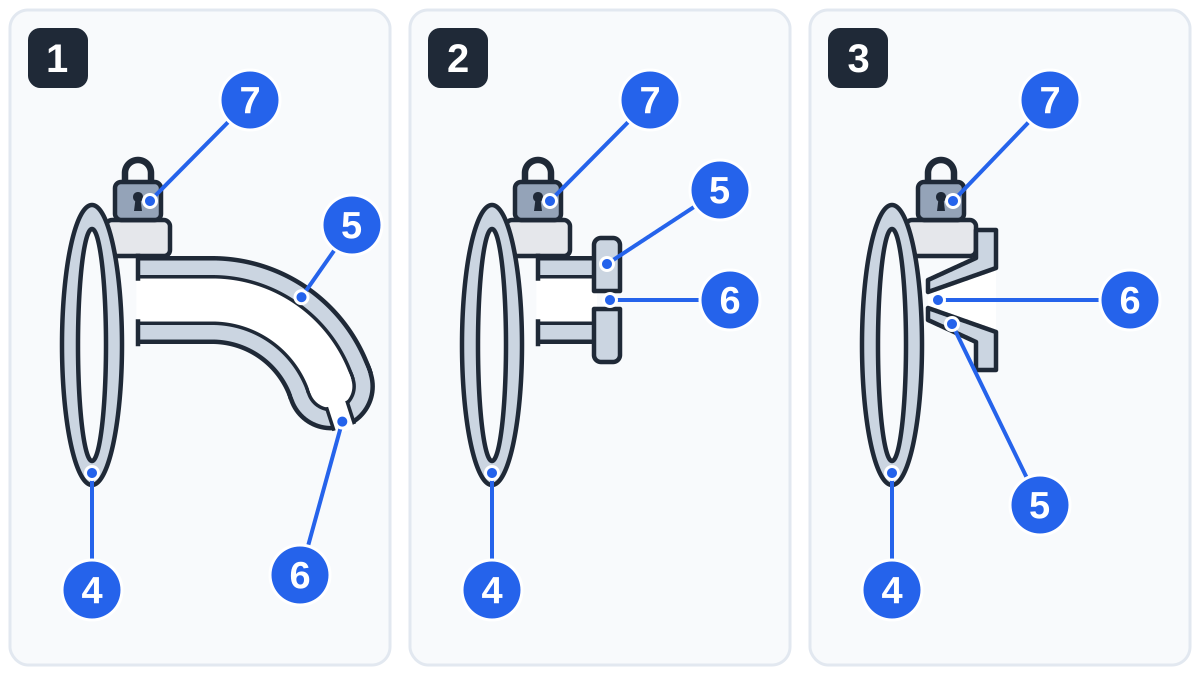
For clothing, the difference between designs comes down to how far the front of the device sits from the body.
| Design | How it sits | Under clothes | What to check |
|---|---|---|---|
| Standard or curved tube | A tube extends from the ring; a curved tube points down rather than straight out | Shows the most, especially a long tube under thin fabric | Tube length compared with what you need, weight, where the lock sits |
| Flat | A short body that ends in a flat front plate with an opening | A lower, rounder outline than a tube | Pressure against the plate, position of the opening, access for cleaning |
| Inverted (inward) | A short tube that recedes towards the body instead of projecting | Designed to sit closest to the body | Inward pressure, contact points, how quickly it comes off |
Flat and inverted designs are built to sit closer to the body than a tube, so they are usually easier to hide. The base ring, the lock and your own anatomy still add to the outline, so none of them is invisible. A flatter shape is not proof of comfort either: pressure from a flat plate or an inward tube is a reason to stop, not something to get used to. Our guides to the flat chastity cage and the inverted chastity cage explain how each works, the overview of types of chastity cages compares the wider range, and the materials guide compares metal, silicone and resin devices.
Fit changes the outline
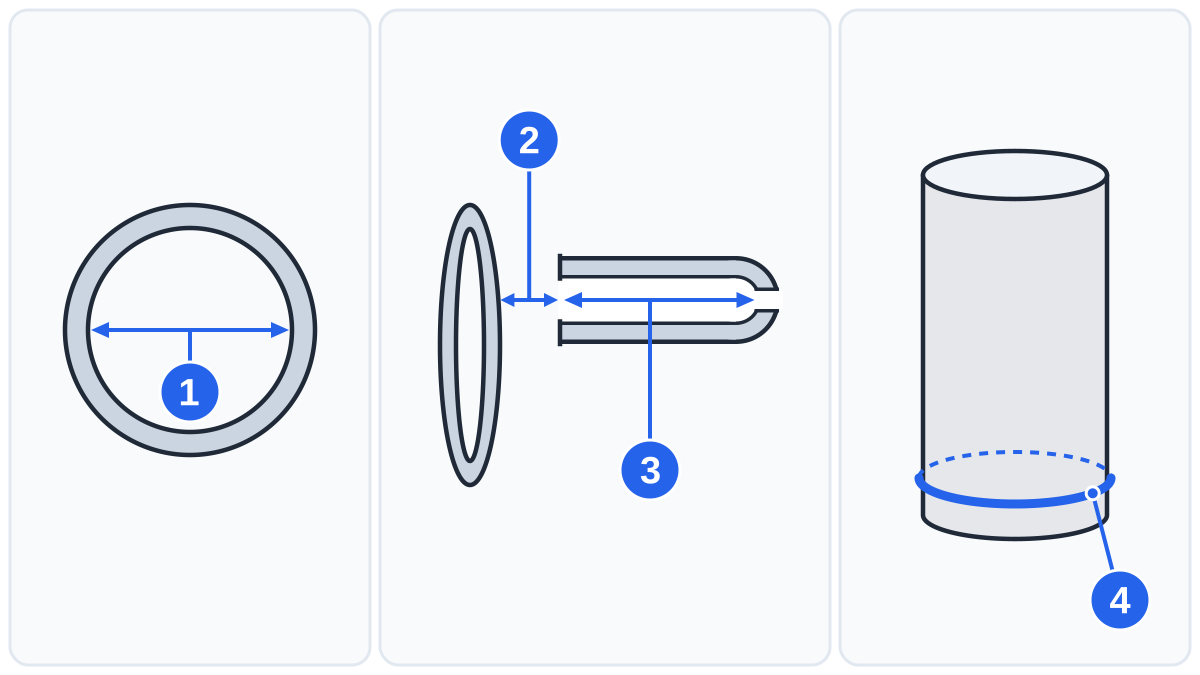
A tube that is longer than you need sits further forward. A wide gap between the ring and the cage lets the cage drop and swing, and a ring that is too large lets the whole device move. Each of these makes a cage easier to see.
Do not choose a smaller ring or a shorter cage just to reduce the outline. An object that constricts the penis can block blood and lymph flow, and a 2024 review of 100 published cases describes this as a urological emergency that needs prompt treatment (Campbell et al., 2024). The sizing guide explains which measurements to ask a maker for, and our guide on how to put on a chastity cage covers checking the fit.
Underwear that holds a cage close to the body
Underwear does most of the work. Briefs, trunks and boxer briefs hold the device against the body so it moves less. Loose boxer shorts let it hang and swing, which shows more under thin trousers. Styles with a shaped front pouch give the device room while still holding it.
Supportive is not the same as tight. Underwear that squeezes presses the ring and the edges of the cage into the skin. The NHS notes that thrush, a common yeast infection, tends to grow in warm, moist conditions, and its advice for easing thrush and stopping it coming back includes wearing cotton underwear and not wearing tight underwear (NHS: thrush). If you will be warm or on your feet all day, carry a spare pair so you can change into something dry.
Trousers, fabrics and colours that hide a bulge
| Item | Tends to hide a cage | Tends to show it |
|---|---|---|
| Trousers | Denim, chino twill, wool and other structured fabrics, with some room at the seat and thigh | Thin jersey joggers (sweatpants), leggings, stretchy sportswear, very slim cuts |
| Colour and pattern | Dark colours and small patterns that break up shadows | Pale, plain fabric that shows every shadow |
| Layers | An untucked shirt, a longer top or an open jacket | A fitted shirt tucked into slim trousers |
Check yourself from the side in a mirror, both standing and sitting, because sitting pulls fabric tight across the front. Trousers with a little extra room at the front hide more than a size that is snug everywhere.
Comfort under clothes: pressure, rubbing and heat
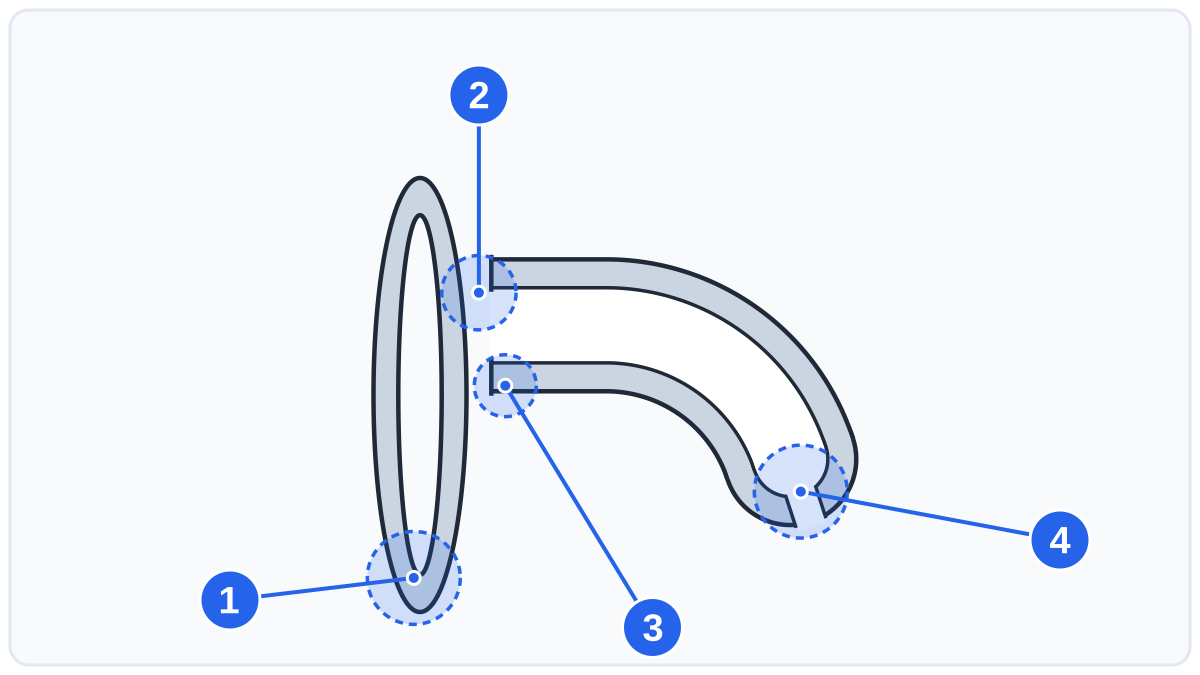
Clothes that hide a device can also press on it. Slim trousers, tight underwear and long periods of sitting, such as desk work, car journeys or flights, push the ring and the cage against the body at the points shown above. Skin rubbing against fabric can chafe, and sweat makes friction worse. The American Academy of Dermatology advises stopping an activity if you feel pain or discomfort or your skin turns red (AAD).
Take the device off at once if you notice pain, swelling, numbness or a change in skin colour; case reports of rings stuck around the penis describe these signs (Sarkar et al., 2019; Weston and Golden, 2026). If it will not come off, get urgent medical help. A review of constriction injuries found that people who reach treatment late tend to have more serious injuries, while most do very well when the object is removed quickly (Silberstein et al., 2008). Sudden, severe pain in a testicle needs emergency care: go to an emergency department (A&E in the UK) straight away or call 911 in the US or 999 in the UK (NHS: testicle pain). Keep the key or release with you during the day so you can act quickly; the safety guide lists warning signs and what to do.
Chastity devices themselves have not been studied clinically. A 2026 expert opinion in The Journal of Sexual Medicine notes that male chastity devices "have not been evaluated in clinical or epidemiologic studies" (Wang and Raad, 2026), and the nearest medical literature, on rings and other objects that constrict the penis, consists mostly of case reports and small case series (Silberstein et al., 2008). Our guide to chastity cage risks and long-term effects sets out what is known.
Gym and sports
Exercise adds heat, sweat and movement. Dermatologists recommend moisture-wicking, loose-fitting clothes for physical activity, and avoiding cotton during exercise because it soaks up sweat, which can lead to friction and chafing (AAD). One option is a light, wicking base layer that limits swinging, under looser shorts that hide the outline. If the base layer presses the ring or cage against you, it is too tight.
A chastity cage is not a sports cup and is not designed to protect against impact, so take it off for contact sports and other activities where a blow to the groin is likely. Afterwards, change out of sweaty clothes, then wash and dry the skin; drying properly after washing is part of the same NHS advice on thrush (NHS: thrush).
Swimming and changing rooms
Wet swimwear is thin and clings, so it shows a device more than almost anything else you wear. Swim shorts with a fitted inner lining, or a fitted swim brief under looser shorts, show less than a single thin layer. Before wearing a device in a pool, the sea or a hot tub, check the maker's instructions, because materials, coatings and locks differ.
After swimming, rinse and dry both the device and the skin. Rinsing through the cage does not replace taking it off to wash and dry the skin underneath; the hygiene guide explains why. Shared changing rooms (locker rooms) are the hardest place to stay discreet: a cubicle, a changing robe or changing at home avoids the problem.
Sleeping in a chastity cage
What you wear to bed makes little difference; the question is the device. Erections during sleep are a normal part of the sleep cycle. A review in Neurologic Clinics describes them as occurring in healthy men in close association with REM sleep, and the cycle as apparently unaffected by behaviour (Hirshkowitz and Moore, 1996). A cage is designed to prevent a full erection, so these night-time erections press against it. This guide does not recommend overnight wear. If you are considering it, read the safety guide first, and treat pain that wakes you as a reason to take the device off.
Airport security, body scanners and metal detectors
No one can promise how a particular device will screen: that depends on the equipment, how it is set up and the device itself. This is what official guidance says.
- United States. The TSA screens travellers with millimetre-wave body scanners and walk-through metal detectors. It says the scanners look for "metallic and non-metallic threats" concealed under clothing, and show the location of a possible threat on a generic outline of a person rather than an image of you. You can generally decline the scanner and have a pat-down instead, although travellers whose boarding pass shows they were selected for enhanced screening may have to be scanned. Pat-downs are done by an officer of the same sex, and you can ask for private screening with a companion of your choice. You will be asked to take off bulky clothing, such as an oversized hoodie or a large sweater, for the scan (TSA: security screening).
- United Kingdom. You can be picked for a body scan at random or after setting off a metal detector. You can ask for a private search instead: a thorough hand search in which you may be asked to loosen or take off some clothing. The officer who reviews a scan sees a mannequin-style diagram, and you can ask for that officer to be the same sex as you (GOV.UK: your rights at the airport).
In practice, a metal device, or the metal lock or pin on a plastic one, can set off a metal detector, and body scanners are built to find non-metallic items, so a resin or silicone device is not a way around screening. If the scanner or detector alarms, a pat-down may follow. Rules and equipment differ between countries and airports, so check the airport or national authority for your route. If you would rather not explain a device at security, the simplest option is not to wear it when you fly. If you do wear it, keep the key with you rather than in checked baggage.
Frequently asked questions
Can people tell if you are wearing a chastity cage?
It depends on the design, the fit and the fabric. A well-fitted device that sits close to the body is much harder to see under structured, darker clothes; thin, pale or clingy clothing and wet swimwear show the most. Check from the side in a mirror, standing and sitting.
Which type of chastity cage is easiest to hide?
Designs that sit closest to the body, such as flat and inverted cages, with a built-in lock rather than a hanging padlock. Fit matters as much as design, and no design is invisible.
What underwear helps hide a chastity cage?
Supportive styles such as briefs, trunks or boxer briefs that hold the device still without squeezing it. Loose boxers let it swing. NHS advice on thrush includes wearing cotton underwear and avoiding tight underwear.
Should I size down so the cage shows less?
No. A smaller ring or a shorter cage can press or constrict, and constriction of the penis is treated as a medical emergency. Choose the size that fits and adjust your clothes instead.
Will a chastity cage set off airport security?
It can. Metal devices and metal locks can trigger metal detectors, and body scanners are designed to detect non-metallic items under clothing. In the US you can ask for private screening; in the UK you can ask for a private search.
Can you wear a chastity cage to the gym?
If you choose to, wear moisture-wicking fabric, change out of sweaty clothes afterwards, take the device off for contact sports, and stop if you feel pain or the skin turns red.