
Chastity cages are mainly grouped by shape: standard curved tubes, flat cages, inverted (inward) cages, short micro or nub cages, and open-bar or full-tube designs. They are made from resin or plastic, stainless steel or silicone, and often lock onto a base ring that sits behind the scrotum. Correct fit matters more than the type.
You will also see them called cock cages, penis cages or chastity tubes. As a rule of thumb, a standard tube leaves the most room inside, flat and inverted cages trade internal room for a lower profile, open-bar designs are the easiest to rinse, silicone is soft but easier to remove without unlocking, and steel is heavier and very durable.
Chastity cage types at a glance
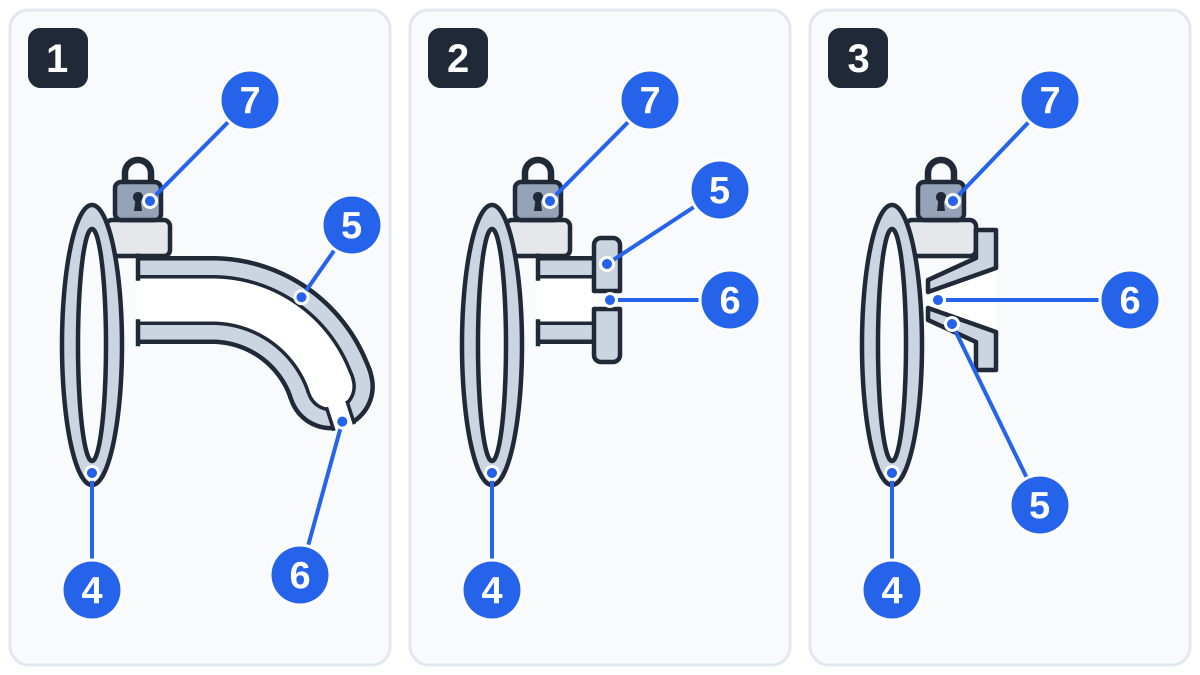
| Design | Profile and discretion | Hygiene access | Security | Typical materials |
|---|---|---|---|---|
| Standard (curved) tube | Extends forward and down from the ring; shows more under close-fitting clothes than flat or inverted designs | Opening at the tip, often with slots for airflow | Mainly set by the base-ring size and the ring-to-cage gap | Resin or plastic, steel, silicone |
| Flat | Short body ending in a flat front plate; lower profile than a standard tube, though not invisible | Urine leaves through an opening in the plate, which has to line up; little airflow behind the plate | Little internal room, so the ring size and ring gap have to be right | Usually rigid resin or steel, since the plate has to keep its shape |
| Inverted (inward) | Very short tube that recedes toward the body; sits almost flush | Skin sits in a small, enclosed space; washing and drying need the device off | Holds the penis inward by design, so pressure and security both depend on precise fit | Rigid resin or steel |
| Micro or nub | Very short tube with a small outline; the labels are not standard sizes | Little space between skin and tube | A tube shorter than you need adds pressure, not security | Resin or plastic, steel |
| Open-bar (birdcage) | Outline similar to a standard tube, built from bars or rings | The most open surface for air and rinsing | Rigid bars keep their shape; skin can push through wide gaps | Steel or resin |
| Full (closed) tube or sleeve | Smooth, solid outline | Least airflow; moisture stays in until the device comes off | Rigid tubes hold their shape; silicone sleeves can be stretched off | Plastic, silicone or steel |
A chastity belt is a different category: a lockable band around the waist with a front shield, so it does not depend on a base ring alone to stay in place. It covers more skin, which makes washing and drying around it more involved. See the chastity belt guide.
Chastity cage shapes and styles
Standard (curved) cages
The standard design is a tube that follows the resting, downward curve of the penis and locks onto the base ring. Because it leaves the most internal room of the main shapes, small sizing errors matter less than with flatter designs. The trade-off is profile: the tube extends forward, so it shows more under close-fitting clothes. Slotted tubes, solid full tubes and open-bar "birdcage" designs are all variations on this shape.
Compare it directly with a flat design in curved vs flat chastity cages, or read more about tube-style cages.
Flat cages
A flat cage replaces the forward-pointing tube with a short body that ends in a flat front plate. The opening for urine is a hole or slot in that plate, and the whole device sits close to the body, which gives a lower profile under clothing. The trade-offs are less internal room, an opening that has to line up correctly and less airflow behind the plate. Our flat chastity cage guide explains how the design works and what to check before choosing one.
Inverted (inward) cages
An inverted cage uses a very short tube that recedes toward the body instead of extending away from it, so the penis is held inward and the device sits almost flush. You will also see inward, negative or reverse used for similar designs; the names are not standardized, so compare the actual shape and internal dimensions. Because the design works by holding tissue inward, some contact pressure is built in, and precise fit matters a great deal. The inverted chastity cage guide covers how it works, how it differs from a flat cage and which warning signs to watch for.
Micro and nub cages
Micro, nano and nub cages are very short tubes. These labels are marketing categories, not standard sizes, so two "micro" cages can differ a lot in internal length. A tube shorter than your measurements call for does not make a device more secure; it adds pressure at the tip. Compare internal dimensions and check them against the sizing guide before choosing a short design. More detail: micro chastity cages.
Open-bar and full-tube cages
Open designs, including birdcage styles, are built from bars or rings with gaps between them. They leave more skin exposed to air and water, which makes rinsing and drying easier, although skin can push through wide gaps. Closed, full-tube designs have solid walls with a few openings: the outline is smoother, but there is less airflow and moisture stays in until the device comes off. See open vs closed chastity cages.
Chastity cage materials: steel, resin, plastic and silicone
Material changes weight, rigidity and how easy a device is to clean. On its own it does not make a device comfortable or safe: the finished shape, the edges and the fit matter as much as the material name.
| Material | Weight and feel | Rigidity and security | Cleaning and care | Check before buying |
|---|---|---|---|---|
| Stainless steel or titanium | Steel is the heaviest common option and titanium is lighter; both feel cold at first | Rigid and very durable | Smooth, hard surface that is easy to wash | The alloy if you react to some metals; welds, seams and edges; metal parts can set off metal detectors |
| Resin or plastic (moulded or 3D-printed) | Light | Rigid, but a cracked part should not be worn | Smooth moulded parts wash easily; printed parts can have layer lines or a rough finish that is harder to clean | The exact material and finish, and the maker's cleaning instructions |
| Silicone | Light and soft | Flexible, so it is easier to remove without unlocking | Check which cleaners the material tolerates | Softness does not remove pressure or the risk of skin irritation |
If you know you react to some metals, ask the maker which alloy a steel cage uses before you buy. The NHS lists some metals, including nickel, among the substances that can trigger allergic contact dermatitis. Labels such as "medical grade" usually describe the raw material rather than the finished device, and no material label establishes a safe wear time. Do not boil a cage or use strong cleaners unless the maker says the material tolerates it.
For more on finishes and cleaning, see the chastity cage materials guide and the guides to metal, plastic and silicone cages.
Rings, locks and other features
Base rings and hinged rings
The base ring anchors the whole device, so its size and shape are central to fit. Rings come in solid one-piece and hinged versions; a hinged ring opens so it can be closed around the base rather than slipped on. Some designs also let you change the gap between ring and cage with spacers. See hinged chastity cages.
Locks and electronic locks
Cages close with a small padlock, a lock built into the cage, or a numbered plastic tag that has to be cut off. Some devices use an electronic lock opened through an app, sometimes so that a partner can unlock it remotely. That adds a battery, an app and a connection that can fail, so check that there is a mechanical or emergency release that does not depend on them. See remote-controlled chastity cages.
Custom-fit and 3D-printed cages
Some makers print or machine a cage to your measurements. Custom sizing can solve fit problems that standard sizes cannot, but it is only as accurate as the measurements, and finish and durability vary between makers. See custom-fit chastity devices.
Price
A higher price does not guarantee a better fit, and a cheaper device needs the same checks as any other: smooth edges, no cracks and a lock that opens reliably. See budget chastity cages and high-end chastity cages.
How to choose a chastity cage type
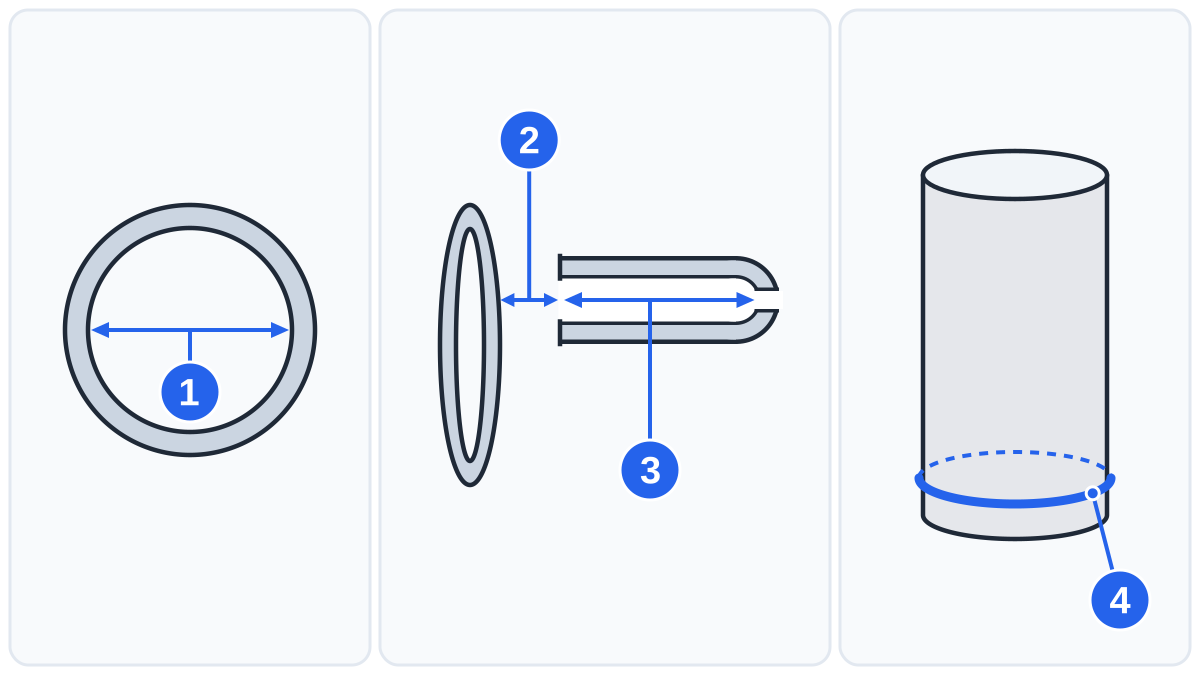
- Start with fit. The base-ring size, the gap between ring and cage and the internal length of the cage decide comfort more than the type does. Follow the maker's measuring instructions and compare them with our sizing guide.
- Decide what matters most. If a low profile under clothes is the priority, flat and inverted designs sit closest to the body. If you are new to cages, a standard tube is more forgiving of small sizing errors.
- Plan for cleaning. Every design has to come off for the skin underneath to be washed and dried; open designs make rinsing easier but do not replace removal.
- Check the lock and release. The wearer should be able to open the device straight away, without waiting for another person or an app.
- Learn how it goes on. Our step-by-step guide on how to put on a chastity cage explains the process and the fit checks to make afterwards.
If you are starting out, read our first-time chastity cage guide. For how different designs show under clothing, see chastity cages and clothes.
Safety basics for every type
No type of chastity cage has been shown to be safe for extended wear. A 2026 expert opinion in The Journal of Sexual Medicine notes that male chastity devices "have not been evaluated in clinical or epidemiologic studies". What the medical literature does contain is case reports of constriction rings around the penis and scrotum that became stuck.
A base ring is a closed ring around the base of the penis, often behind the scrotum. In one published case, a metal ring worn around the base of the penis and scrotum for two days caused severe swelling and had to be cut off with an electric saw; the man recovered after hospital treatment (Harris et al., 2020). A review of penile constriction devices warns that failing to remove them can lead to significant ischaemia (loss of blood supply) and tissue loss, and that people who seek help after a device has been stuck for more than 72 hours are more likely to have severe injuries than those treated sooner (Silberstein et al., 2008).
Take the device off straight away if you notice pain, swelling, numbness, coldness or a change in skin colour, rather than waiting to see whether it settles. If it will not come off, or symptoms continue after removal, get urgent medical help at an emergency department (A&E in the UK). For sudden, severe pain in a testicle, go to an emergency department or call your local emergency number (999 in the UK) straight away, as NHS guidance on testicle pain advises.
Cleaning the device and caring for the skin are separate jobs, and the skin can only be washed properly with the cage off. The NHS lists not washing properly, and irritation from soap or shower gel, among the causes of balanitis (a swollen, sore head of the penis); its self-care advice is to wash with just water or an emollient, dry gently and avoid soap and shower gel. Clean the device itself as its maker instructs.
Some cages are marketed for "long-term" wear. That is a product description, not evidence: there is no established safe wear time for any design. Our guide to chastity cage risks and long-term effects covers pressure points, warning signs and what is and is not known.
Guides in this section
- Shapes: curved vs flat, flat cages, inverted cages, micro cages, tube-style cages, open vs closed cages
- Materials: metal, plastic, silicone, materials compared
- Features: hinged cages, custom-fit devices, remote-controlled cages, Holy Trainer cages
- Cost and wear: budget cages, high-end cages, short-term vs long-term cages
- Practical guides: putting on a cage, sizing, risks and long-term effects
This page compares design categories rather than individual products and does not rank brands. ChastityTek is developing its own device, Veru One; it is not yet available to buy.
Frequently asked questions
What type of chastity cage is best for beginners?
There is no single best type. A standard curved tube is the most forgiving starting point because it leaves more internal room than flat, inverted or micro designs, so small sizing errors matter less. A correctly sized base ring matters more than the material or the label.
What is the difference between a flat and an inverted chastity cage?
A flat cage ends in a flat front plate with an opening for urine, so it sits close to the body. An inverted cage uses a short tube that recedes toward the body and holds the penis inward. Both have a lower profile than a standard tube, but the inverted design deliberately holds tissue inward, so its fit is even more critical.
Is a metal or plastic chastity cage better?
Neither is better for everyone. Steel is heavier, very durable and easy to wipe clean, but it can set off metal detectors and some people react to certain metals. Resin and plastic are lighter; check the surface finish, especially on 3D-printed parts.
What is the most discreet type of chastity cage?
Flat and inverted designs sit closest to the body, and short designs have a smaller outline, but none is invisible. How a cage shows depends on its fit, your body and your clothes.
Is any type of chastity cage safe for long-term wear?
No design has been shown to be safe for long-term or continuous wear, because chastity devices have not been studied clinically. Remove the device if you notice pain, swelling, numbness or a colour change, and read our risks and long-term effects guide.
How should a chastity cage be cleaned?
Take it off, clean the device as its maker instructs, then wash the skin underneath with water and dry it gently. NHS advice for balanitis is to use just water or an emollient and to avoid soap and shower gel.