
The phrase "chastity belt" can describe different things depending on context. In history discussions it may refer to stories or artifacts; in modern communities it often means controlled-access intimacy devices and the relationship rules around them.
The most useful way to understand the term is to separate language from implementation. Language tells you what people call it. Implementation tells you how people actually use it in real life.
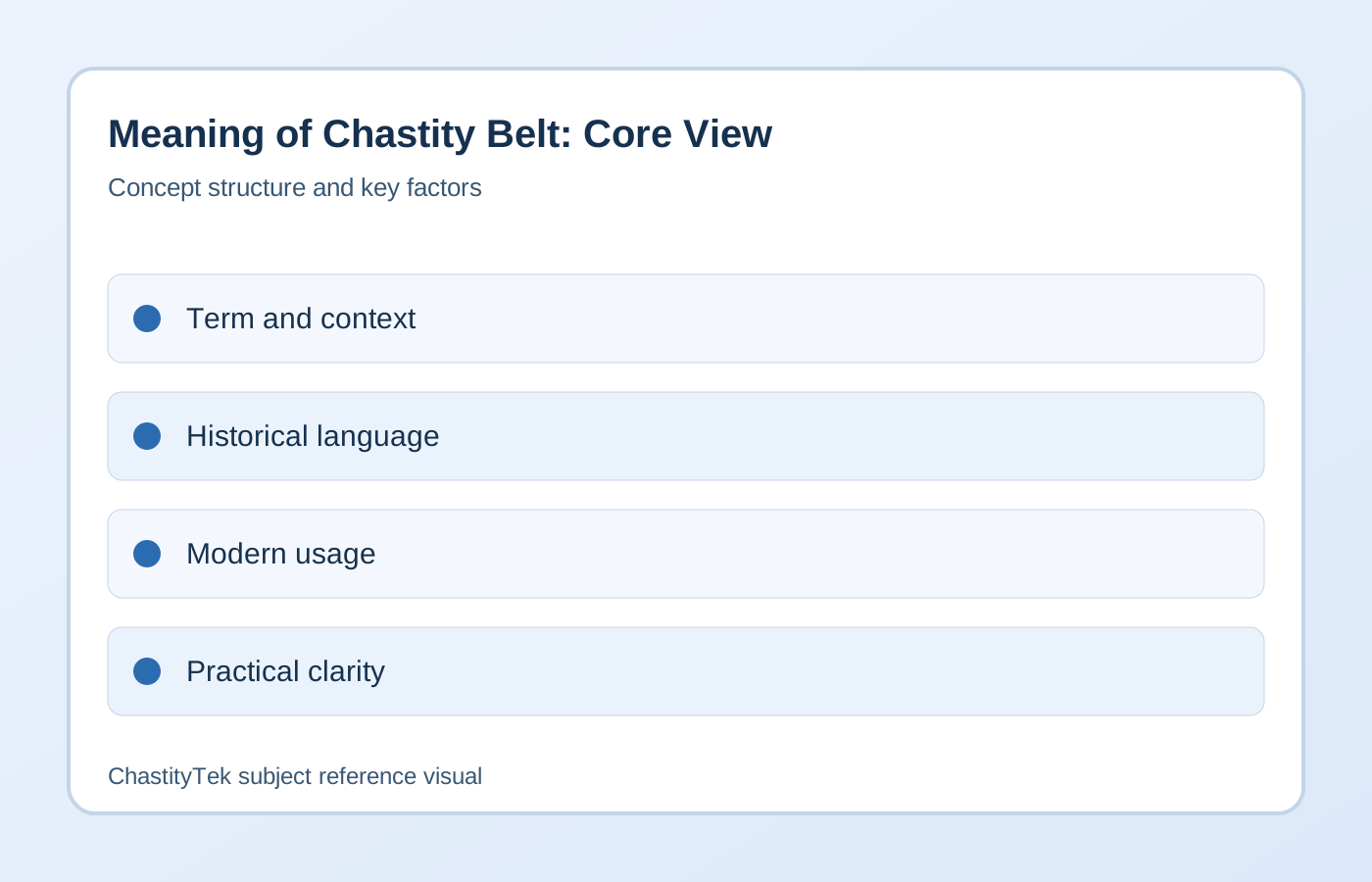
Core Meaning in Plain Language
At the broadest level, a chastity belt is a restraint concept used to limit access until release conditions are met. In modern practice, those conditions are usually negotiated rather than imposed.
That matters because many people hear the word "belt" and imagine one fixed historical object. In reality, modern conversations may involve multiple form factors and relationship structures.
Why the Term Is Often Misunderstood
The term carries baggage from media, folklore, and internet shorthand. One person may use it to mean medieval mythology. Another may use it as a quick label for modern cage-style devices. A third may use it to describe a power-exchange protocol, not hardware.
This overlap creates confusion when people compare products or discuss safety. Clarifying terms early saves time and prevents poor assumptions.
Practical Vocabulary That Improves Clarity
When moving from broad meaning to practical decisions, these words are more helpful than vague labels:
- Fit: how the device sits on the body
- Retention: how well it stays in place
- Contact points: where pressure or friction can occur
- Hygiene access: how easily routine care can be maintained
- Protocol: the agreed relationship rules around use
These terms make conversations concrete and easier to troubleshoot.
Meaning vs Real-World Use
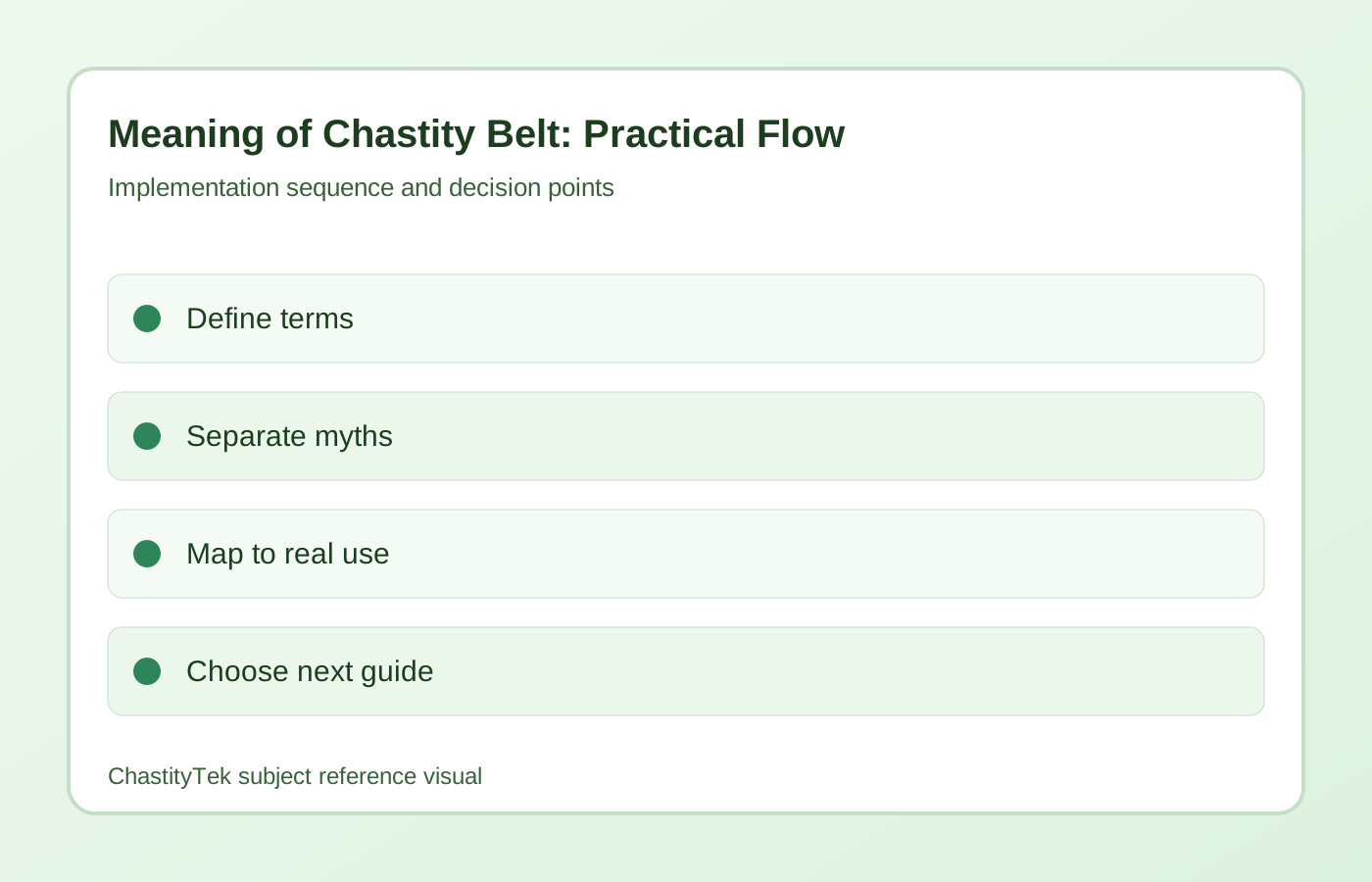
A strong definition page should answer two questions at once:
- What does the term mean in general conversation?
- How does that meaning map to practical behavior?
In real-life use, the topic quickly becomes about comfort, communication, boundaries, and sustainability. If content stops at definition, readers still do not know how to make good decisions.
How to Evaluate Advice on This Topic
Not all advice is equal. Useful guidance tends to share common traits:
- It acknowledges consent and boundaries explicitly
- It treats fit and hygiene as core requirements
- It avoids dramatic claims presented as universal truth
- It explains progression rather than pushing immediate extremes
Advice that skips these points often creates problems when applied in daily routines.
Frequently Asked Questions
Does chastity belt always refer to a historical metal device?
No. In modern usage it is often umbrella language for a broader category of consensual control practices and devices.
Why do people switch between belt and cage terms?
Most people begin with broad language, then become more specific as they learn fit and device details.
Is this term gender-specific?
No. It appears in male, female, and mixed-context discussions.
What should someone read after learning the meaning?
The best next step is the practical page on how chastity works in real life, followed by fit-focused guides.
What is the biggest misunderstanding?
Assuming the term refers to one exact design instead of a broad topic with different contexts and implementations.
Related Chastity Belt Reading
- What Is a Chastity Belt and How Does It Work in Real Life?
- What Is a Female Chastity Belt and How Is It Used Safely?
- What Is a Male Chastity Belt and How Does It Compare to a Chastity Cage?
- What Is the History of the Chastity Belt? Myths, Records, and Modern Reality
Veru One and This Topic
Once meaning is clear, many readers move from terminology to practical product comparison. At that stage, Veru One is typically evaluated for comfort, accountability workflow, and routine wearability rather than for terminology alone.

Use the email form below this page to get launch updates and product availability news.