
Sissy Chastity Hygiene Guide: Daily Cleaning and Infection Prevention
Proper hygiene is essential for safe, comfortable chastity wear. This guide covers daily cleaning routines, infection prevention, and the hygiene considerations that affect device selection and wear duration.
← Return to The Complete Guide to Sissy Chastity
Why Hygiene Is Critical
The environment beneath a chastity device—warm, moist, and enclosed—is ideal for bacterial and fungal growth. Poor hygiene leads to:
- Skin Infections: Bacterial infections that cause redness, swelling, and pain
- Fungal Infections: Yeast infections causing itching, redness, and white discharge
- Unpleasant Odor: Bacterial buildup creates strong, persistent smells
- Skin Breakdown: Moisture and bacteria weaken skin, leading to sores
- Urinary Tract Infections: Bacteria can travel up the urethra
Good hygiene practices prevent all of these issues and allow for comfortable extended wear.
The Daily Hygiene Routine
Morning Routine (5-10 minutes)
- Shower Rinse: Direct warm (not hot) water through all openings and gaps in the device. Use a detachable shower head if available.
- Soap Application: Apply a small amount of mild, fragrance-free antibacterial soap. Work it around all accessible areas.
- Thorough Rinse: Rinse completely—soap residue can cause irritation.
- Dry Completely: Pat dry with a clean towel. Use a hair dryer on cool setting for hard-to-reach areas. Moisture trapped under the device promotes bacterial growth.
- Inspection: Check for any signs of irritation, redness, or skin changes.
Post-Urination Care
Urine residue is a primary source of odor and bacterial growth. After urinating:
- Rinse: Use a squeeze bottle filled with warm water to rinse the area (keep one by the toilet)
- Dry: Pat or dab dry with clean tissue or toilet paper
- If Rinsing Isn't Possible: At minimum, dab away any visible moisture with clean tissue
Evening Routine (5-10 minutes)
Repeat the morning shower routine before bed. This removes a day's worth of sweat, bacteria, and any urine residue.
Weekly Deep Clean
If possible, remove the device once per week for:
- Complete Skin Inspection: Check every area that contacts the device
- Thorough Skin Cleaning: Wash all areas that are normally covered
- Device Cleaning: Clean the device itself inside and out
- Skin Recovery: Allow skin to "breathe" for 30-60 minutes if possible
Cleaning the Device Itself
Routine Cleaning (Daily)
- Mild antibacterial soap and warm water
- Soft brush (old toothbrush works well) for crevices
- Rinse thoroughly
- Air dry completely before wearing
Deep Cleaning (Weekly or Between Users)
For Metal Devices:
- Boiling water (5-10 minutes) for sterilization
- Alternatively: 70% isopropyl alcohol rinse
- Ensure complete drying to prevent rust on non-stainless metals
For Bio-Resin Devices:
- Cannot be boiled (will warp or crack)
- Soak in diluted antiseptic solution (follow product instructions)
- Rinse extremely thoroughly—chemical residue causes irritation
For Silicone Devices:
- Can be boiled (check manufacturer guidance)
- Can also be cleaned with diluted bleach solution (10:1 water to bleach), then thoroughly rinsed
- Do not use silicone-based cleaners or lubricants
Device Design and Hygiene
Some device features significantly impact hygiene:
Open vs. Closed Designs
Open Designs (Bars or Large Ventilation Slots):
- Easier to clean while wearing
- Better air circulation reduces moisture
- Easier to rinse after urination
- Recommended for extended wear
Closed Designs (Solid Tube):
- More challenging to clean thoroughly
- Trap moisture and heat
- Better aesthetic concealment
- Best for shorter sessions with regular removal
Urethral Tube Openings
The opening at the tip of the cage for urination affects hygiene:
- Large Opening: Easier to clean, easier to urinate cleanly, less urine splashback inside the cage
- Small Opening: More urine residue trapped inside, harder to rinse, requires more diligent post-urination care
Smooth vs. Textured Interiors
Smooth Interior:
- Easier to clean
- Less bacteria harboring
- Recommended for extended wear
Textured Interior (Some 3D-Printed Devices):
- Surface texture traps bacteria
- Nearly impossible to clean thoroughly
- Not recommended for extended wear
Managing Common Hygiene Challenges
Odor Despite Cleaning
Causes:
- Incomplete drying after cleaning
- Urine residue buildup
- Bacterial colonization of porous device material
- Fungal growth
Solutions:
- Ensure complete drying after every cleaning
- Increase frequency of rinsing after urination
- If using porous materials (resin, 3D-printed), the device may need replacement
- Consider switching to non-porous materials (steel, medical silicone)
- If odor persists with clean device and good hygiene, see a doctor—may indicate infection
Skin Irritation and Rash
Causes:
- Moisture trapped against skin
- Friction from device movement
- Allergic reaction to device material
- Soap or chemical residue
- Bacterial or fungal infection
Solutions:
- Remove device and allow skin to fully dry and recover
- Apply antifungal cream if yeast infection suspected
- Use a barrier cream (like zinc oxide) on healed skin before re-wearing
- Consider different device material if allergic reaction is suspected
- Ensure all soap is completely rinsed
Difficulty Cleaning While Locked
Solutions:
- Choose devices with open designs and large gaps
- Use a handheld shower head or squeeze bottle for directed rinsing
- Cotton swabs can reach some areas
- A thin cloth or gauze strip can be worked through larger openings
- If you cannot clean adequately while locked, schedule more frequent removal
Pubic Hair Management
Body hair affects hygiene in chastity:
Options
Trimming:
- Reduces moisture trapping
- Less hair getting caught in device
- Low maintenance
- Minimal skin irritation risk
Shaving:
- Maximum hygiene benefits
- Smooth aesthetic preferred in sissy chastity
- Requires regular maintenance (every 2-3 days)
- Risk of razor burn, ingrown hairs, and irritation—especially problematic under a device
Depilatory Creams:
- Smooth results without razor irritation
- Risk of chemical burns—always patch test
- Never apply over irritated or broken skin
- Thoroughly rinse before wearing device
Best Practice
If shaving or using depilatory creams, do so 24-48 hours before wearing the device. This allows any skin irritation to resolve and ensures no chemical residue remains.
Products to Have on Hand
For Cleaning
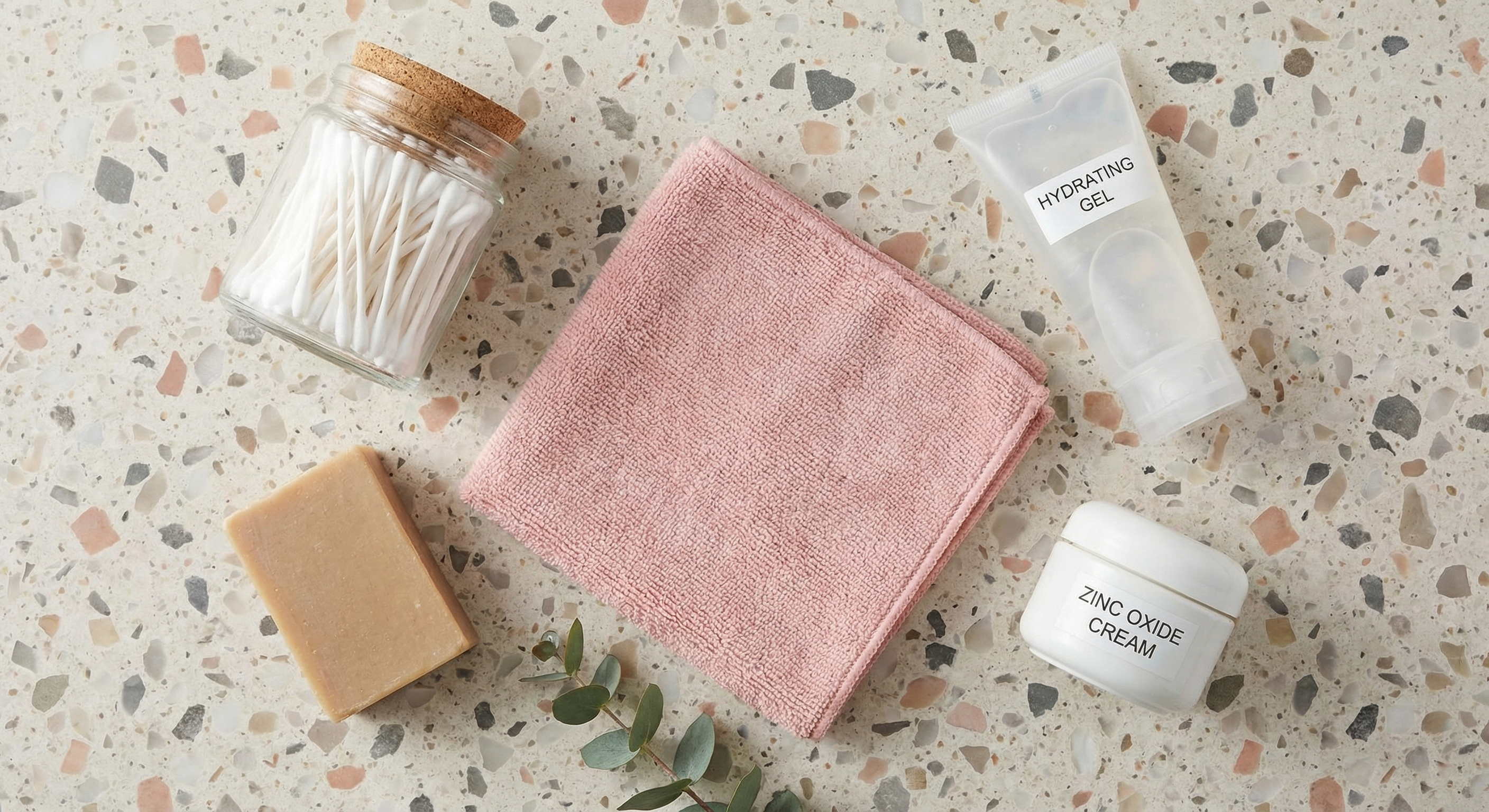
- Mild, fragrance-free antibacterial soap
- Squeeze bottle or portable bidet
- Soft-bristle brush (old toothbrush)
- Clean towels or paper towels for drying
- Hair dryer (for thorough drying)
For Skin Care
- Water-based lubricant (for high-friction areas)
- Zinc oxide barrier cream
- Antifungal cream (for suspected yeast issues)
- Unscented moisturizer (for dry skin after removal)
For Device Care
- Isopropyl alcohol (for sterilization)
- Device-safe lubricant for locks (prevent seizing)
- Storage container (clean, ventilated)
Hygiene and Wear Duration
How long you can safely wear a device depends significantly on hygiene:
| Hygiene Practice | Impact on Wear Duration |
|---|---|
| Twice-daily thorough cleaning | Extended wear possible |
| Post-urination rinsing | Significantly reduces infection risk |
| Complete drying | Prevents fungal issues |
| Weekly removal and inspection | Catches problems early |
| Open device design | Enables longer continuous wear |
Signs of Hygiene-Related Problems
Remove Device and Assess If You Notice:
- Persistent strong odor despite cleaning
- Unusual discharge
- Itching that doesn't resolve with cleaning
- Redness spreading beyond contact points
- Skin that appears white, macerated, or peeling
- Any signs of infection (pus, warmth, fever)
Seek Medical Attention If:
- Signs of infection persist after 48 hours of removal and basic care
- Fever develops
- Redness spreads significantly or develops streaks
- You notice pus or significant discharge
- Pain increases rather than decreases after removal
Summary: The Hygiene Golden Rules
- Clean twice daily minimum—morning and evening
- Rinse after every urination—even if just a quick water rinse
- Dry completely—moisture breeds bacteria and fungi
- Inspect daily—catch problems early
- Choose appropriate devices—open designs for extended wear
- Remove for deep cleaning weekly—when possible
- Never ignore warning signs—infection is easier to prevent than treat
← Return to The Complete Guide to Sissy Chastity
Related Guides
- Safety Protocol — Recognizing and responding to health problems
- Sizing Guide — Proper fit reduces hygiene challenges
- Materials Guide — Material properties affecting hygiene