
February 23, 2026 • ~6 min read
If you’ve ever wondered whether an anal orgasm is “a real thing,” the short answer is yes. This guide keeps things sex-positive, non-graphic, and safety-forward—focused on anatomy, nervous system basics, and consent.

On this page
- What exactly is an anal orgasm?
- Why anal stimulation can feel pleasurable
- The mind-body factor (stress + tension)
- Safety basics that make pleasure more likely
- Mini FAQ: anal orgasm
- How this connects to Veru One
- Q&A about Veru One
What exactly is an anal orgasm?
An anal orgasm is a climax primarily driven by anal and pelvic stimulation rather than direct stimulation of external genitals. The pelvic floor works like a shared sensory “hub,” where signals from the anus, perineum, and genitals overlap—so stimulation in one area can intensify sensations in another. For some people, the experience is full-body and wave-like; for others, it’s best understood as an “amplifier” that increases arousal and strengthens orgasms reached through other forms of stimulation.
This topic is also increasingly mainstream. Large surveys have shown substantial participation in anal sex across adult populations, which is why many clinicians now emphasize open, non-judgmental education and risk reduction.
Why anal stimulation can be pleasurable (in any anatomy)
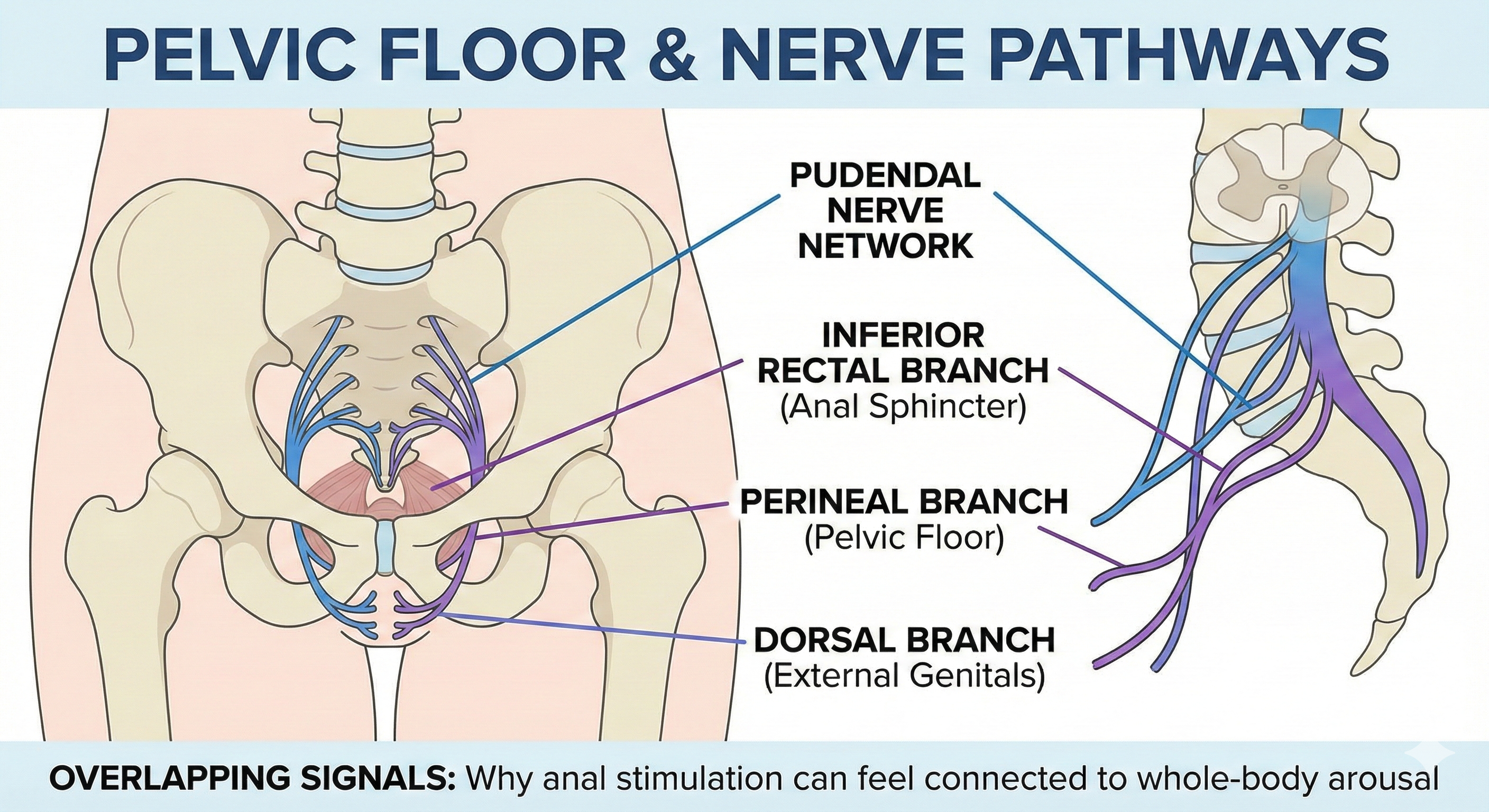
The anal area is highly sensitive. The anal sphincter and surrounding tissues contain dense sensory innervation, which is one reason anal touch can feel intense even without “hard” stimulation. Those signals travel largely through the pudendal nerve network , which includes branches serving:
- The anal sphincter (inferior rectal branch)
- The perineum and pelvic floor (perineal branch)
- The external genitals (dorsal branch)
That overlap helps explain why anal stimulation can feel “connected” to arousal and orgasm—because the nervous system doesn’t treat these zones as isolated islands.
For people with a prostate: a distinct orgasm pathway
In people with a prostate, the rectum sits close enough that pressure against the front wall of the rectum can stimulate prostate-adjacent nerves. Many describe the resulting orgasmic response as deeper and more diffuse than a typical penile orgasm. The subjective timing and recovery can also feel different, because prostate-focused climaxes don’t always follow the same erection → ejaculation → refractory sequence.
For people without a prostate: internal clitoral structures and blended pleasure
For people without a prostate, anal stimulation can still be strongly orgasmic because the clitoris is more than the external glans—it’s a large internal structure with roots and bulbs that wrap around the vaginal canal. Because the vaginal and rectal walls are separated by relatively little tissue, pressure from anal stimulation can indirectly activate portions of the internal clitoral complex. Many people describe this as “blended” pleasure where anal sensation increases intensity and depth.
The mind-body factor: stress changes muscle tone
Here’s the part many guides skip: your nervous system matters. Stress can increase involuntary tightening. Research discussed in your PDF describes how psychological stressors (like a Stroop test and mental arithmetic) increased resting anal pressure in participants. In plain language: anxiety, rushing, or feeling unsafe can make the body clamp down.
That’s why comfort is often more about environment and communication than “trying harder.” Calm pacing, warm-up time, and trust can be the difference between “not for me” and “oh, now I get it.”
Safety basics that make pleasure more likely
Safety is also what makes pleasure possible—because pain and fear shut the experience down. Here are the basics most people benefit from:
- Lubrication is non-negotiable. The anus isn’t self-lubricating, so generous lubricant helps prevent friction and micro-injury.
- Avoid numbing agents. Creams with lidocaine or benzocaine can mask pain signals that would otherwise tell you to slow down or stop.
- Match lube to materials. Some silicone lubes can degrade silicone toys; water-based lubes are broadly compatible but may need reapplication.
- Go gradual and communicate. Let the receiving partner control pace. Treat discomfort as information—not a challenge.
- Don’t overdo “prep.” For deeper cleaning, harsh chemical enemas can irritate tissue and disrupt the local environment; gentler approaches are generally preferred.
Common myths about anal orgasm
Myth: “Only men can have an anal orgasm.” Pelvic nerves don’t care about labels—people with and without a prostate can have strong orgasmic responses through pelvic stimulation.
Myth: “If it hurts, push through.” Pain is a stop signal. Comfort is the foundation of pleasure.
Mini FAQ: anal orgasm
Can an anal orgasm happen without penetration?
Yes. Some people report orgasmic waves from external stimulation, pelvic-floor contraction, or paired stimulation where anal touch amplifies other arousal.
Does everyone have the capacity for an anal orgasm?
No single experience is universal, but comfort tends to improve with patience, relaxation, and choosing stimulation that matches your anatomy.
When should you talk to a clinician?
If you have unexplained bleeding, persistent pain, numbness/tingling, pelvic nerve pain, or a history of colorectal disease or surgery, get medical advice before experimenting.
How this connects to chastity—and Veru One
Chastity play often shifts the focus away from quick genital release and toward anticipation, communication, and whole-body arousal. Because pelvic pathways can feel distinct from typical genital stimulation, some adults explore them as part of orgasm-control dynamics—especially when they’re trying to slow things down and make arousal more mindful.
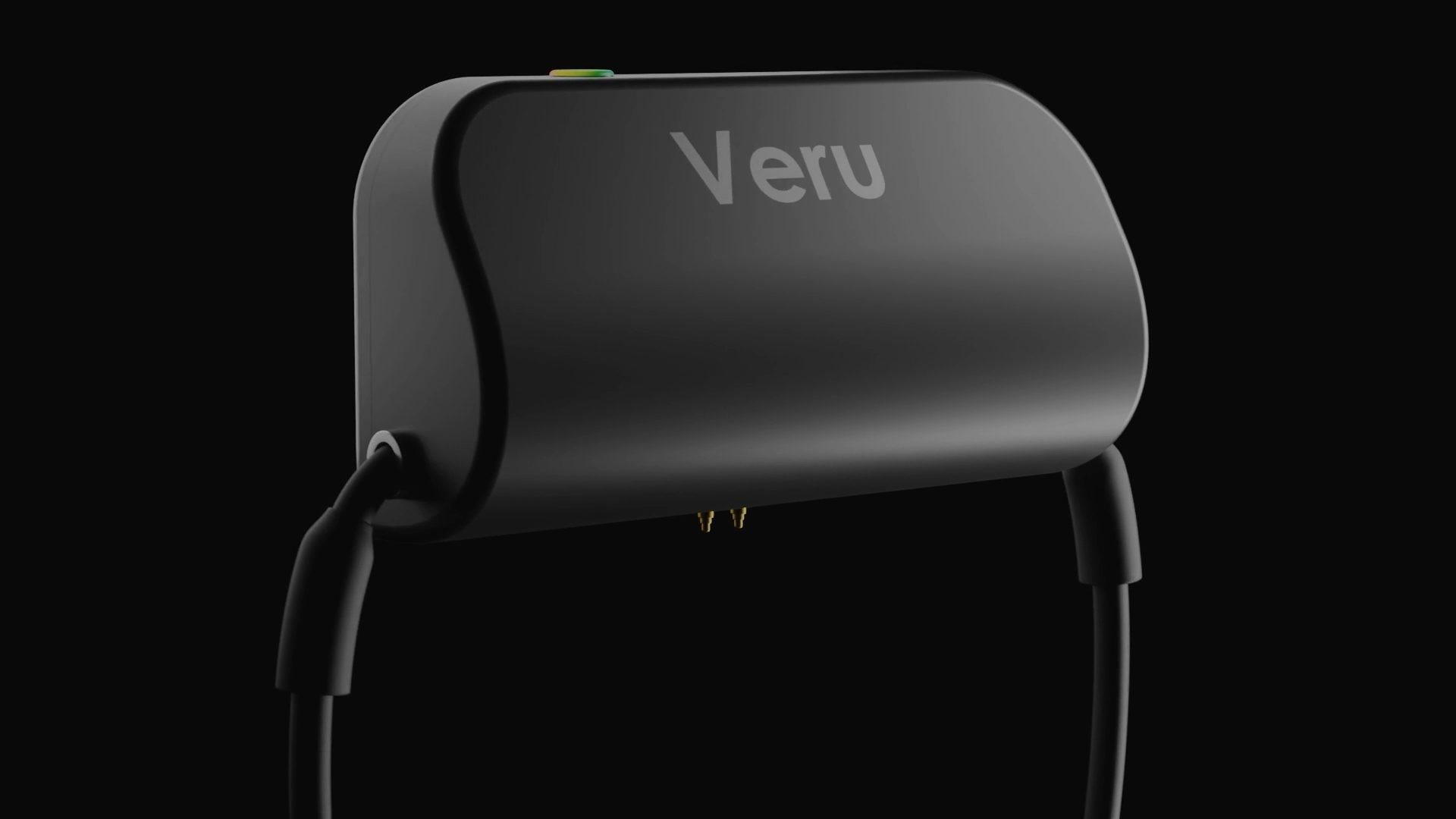
Veru One is Chastity Tek’s upcoming chastity device, designed with comfort and everyday wearability in mind. If your goal is a slower build where communication stays central, learning the basics of pelvic anatomy and consent-first exploration fits naturally with the same philosophy.
Related: Learn about Veru One • More articles
Q&A about Veru One (quick and practical)
What is Veru One?
Veru One is Chastity Tek’s next-generation male chastity device, built for adults who want a more comfortable, discreet way to explore consensual chastity.
Is it only for kink?
Not necessarily. Some couples use chastity to deepen communication, increase anticipation, or create playful “rules” that reduce pressure to rush.
How does this relate to an anal orgasm?
For some users, exploring pelvic-floor and prostate pathways complements chastity because it emphasizes slower, whole-body arousal rather than a fast, genital-only finish.
What’s the safest mindset for both?
Consent-first, pain-aware, and patient. If something feels sharp, numb, or wrong, stop and reassess—comfort comes first.
instead of TSX, or want me to tailor the Veru One Q&A to your exact product language and policies? Tell me your preferred tone (clinical vs playful) and your canonical URL format.
Veru One and This Topic
Anal-orgasm exploration is most useful when partners combine curiosity with clear boundaries, pacing, and feedback.
Use the email signup form below this page for launch updates and availability notifications.