
Orgasm control • Consent-first education • Adults only
What Is a Ruined Orgasm ? Science, Safety, and the “Still Aroused” Variant
“Ruined orgasm” is one of those search terms that people type in quietly—usually after they’ve heard it in kink spaces, seen it referenced in chastity or power-exchange dynamics, or experienced an unsatisfying climax and wondered what just happened. This guide keeps it practical and non-graphic: what it means, why it works (neurologically), how it differs from edging, and how to approach it ethically—with aftercare that actually protects the relationship.
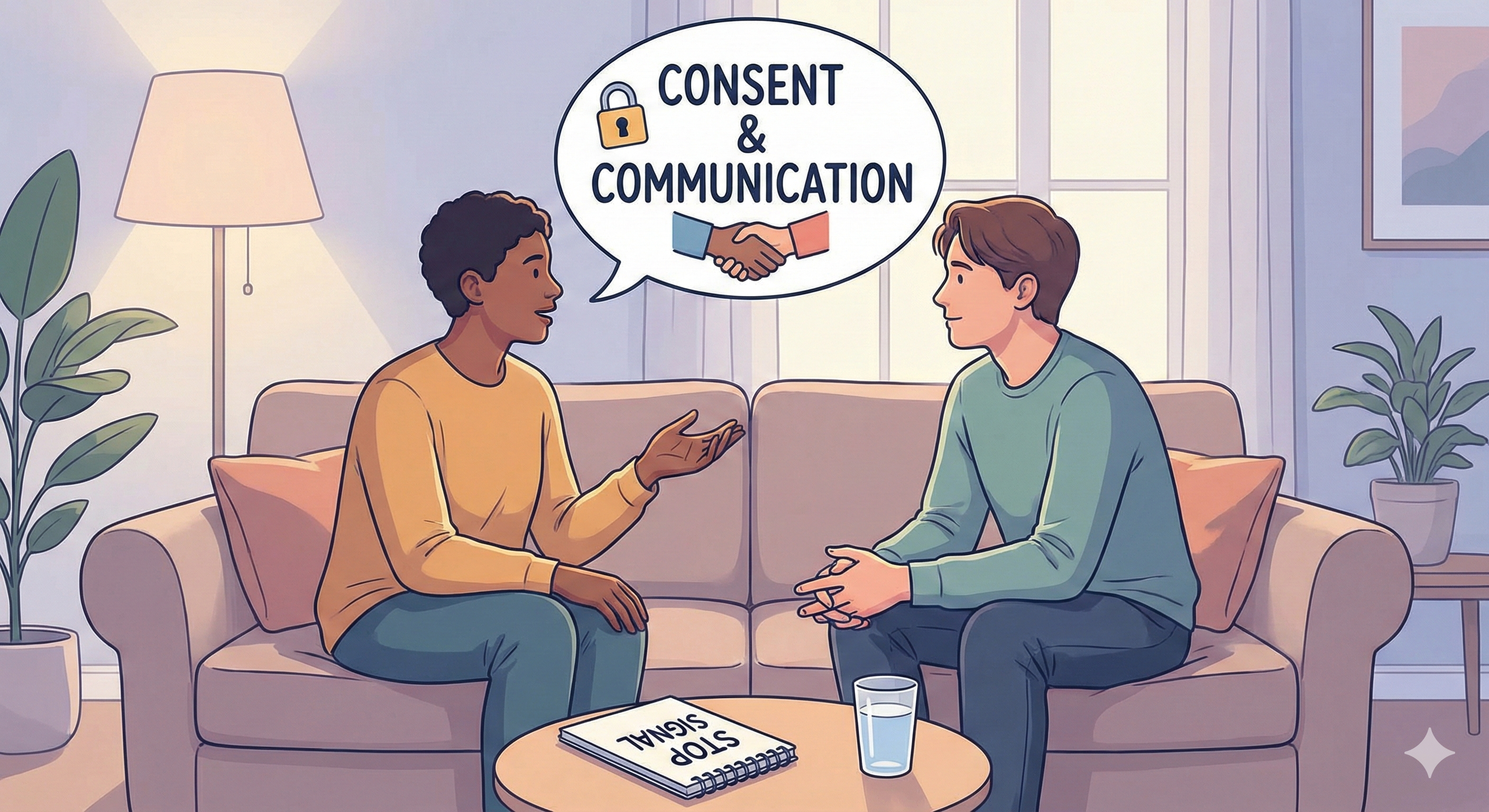
Consent and communication are the whole game—not a footnote.
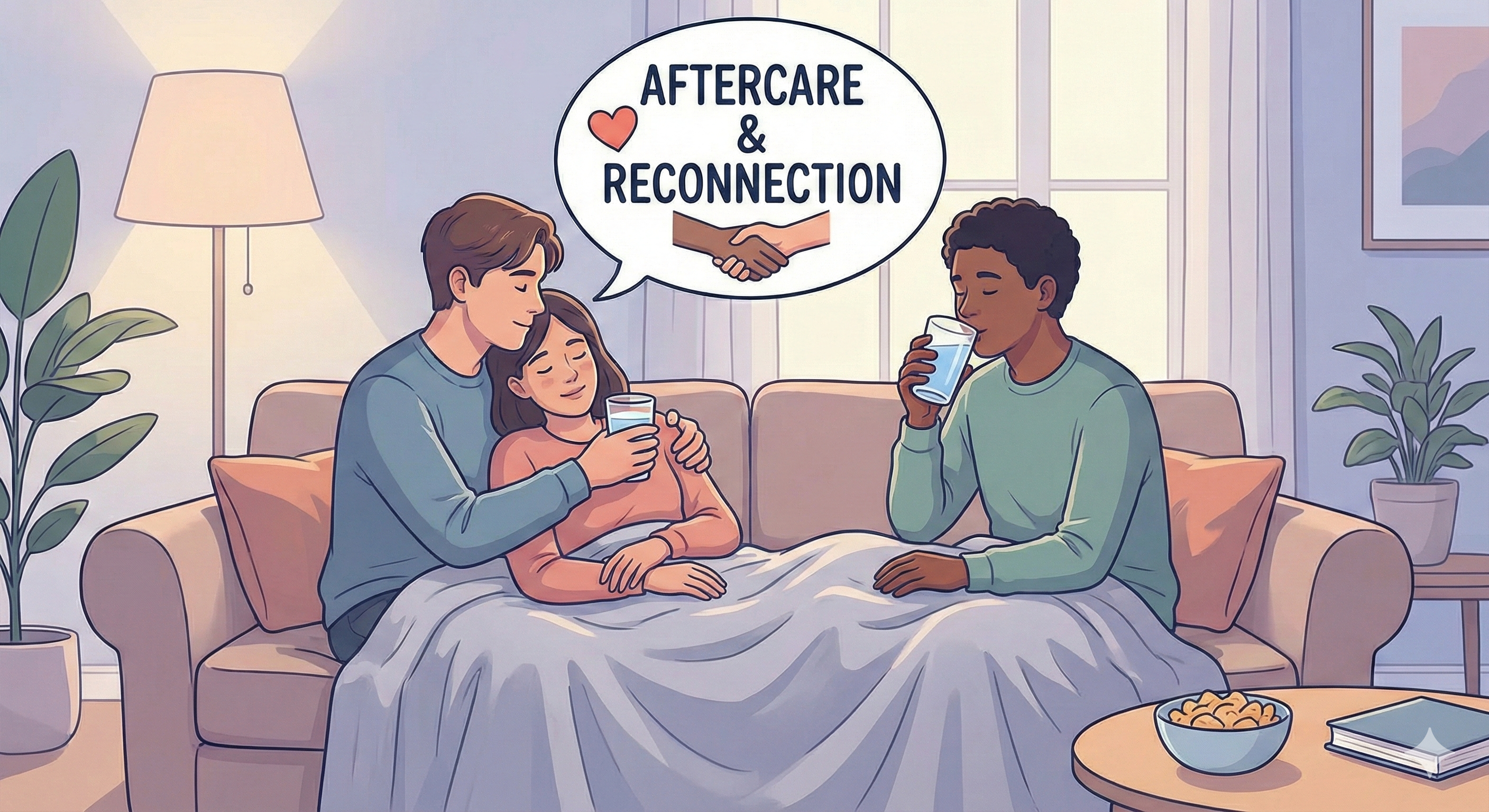
Aftercare turns intensity into closeness instead of resentment.
Definition: what a ruined orgasm is (and what it isn’t)
A ruined orgasm (sometimes called a “spoiled orgasm”) is a form of orgasm control where stimulation stops at the point of no return —the moment the body is committed to climax, but the brain is abruptly deprived of the sensory “reward” it expects. The body may still complete the physical reflex, but the subjective payoff is intentionally muted or absent.
People pursue ruined orgasms for the psychological charge : power exchange, denial, vulnerability, and the intense contrast between “almost” and “not quite.” In other words, it’s less about chasing pleasure and more about intentionally reshaping the meaning of release inside a negotiated dynamic.
Ruined orgasm vs edging vs tease-and-denial
These get mixed up online, but they’re mechanically different:
- Edging pauses stimulation before the threshold so arousal drops, then resumes—usually to intensify a later, fully satisfying orgasm.
- Tease-and-denial repeatedly offers and withdraws stimulation well before the point of no return, often to build anticipation and frustration without triggering the reflex at all.
- Ruined orgasm stops stimulation exactly at the threshold and stays stopped for that encounter—the goal is a low-satisfaction “release,” not amplified pleasure.
If you want a quick gut-check: if you’re planning to “pause and restart,” you’re describing edging. If you’re planning to stop at the last instant and not restart, you’re in ruined orgasm territory.
The “still aroused” hands-off variant people mean by “ruined orgasm”
You asked for the common variant where a person is brought right to orgasm and then touching stops immediately —so the climax happens, but it doesn’t land as a satisfying, full-cycle resolution. This “hands-off” version is often what people are describing when they say the orgasm felt incomplete, and the person can remain aroused afterward.
Why it matters: in a typical orgasm, the body and brain get a “done” signal that helps close the loop. In the hands-off ruined orgasm, the loop can feel left open—leading to a sense of unfinished arousal rather than calm satiation. For some couples, that’s the point: it can reinforce “permission,” “control,” and extended desire—especially inside chastity or keyholder dynamics.
Consent-first framing: Treat this as a negotiated game , not a trick. Agree ahead of time on stop signals, what counts as “too much,” and what aftercare looks like—because the emotional swing can be real even when the consent is enthusiastic.
Why a ruined orgasm can feel so intense (brain + body)
A ruined orgasm isn’t “just disappointment.” It can hit hard because it plays directly with anticipation and reward. In the buildup to orgasm, the brain ramps motivation and expectation—then, at the threshold, the expected reward is abruptly withdrawn. That mismatch can produce a sharp crash in subjective satisfaction and mood.
Another reason some people report staying turned on afterward: a typical orgasm tends to bring a neurochemical braking effect that helps initiate the refractory period and the sense of “okay, I’m done.” With a ruined orgasm, the body may perform the reflex, yet the brain may not fully register the event as complete—leaving arousal “running” instead of shutting down.
Practically, this means two people can experience the same technique very differently: one person feels playful frustration; another feels irritated, hollow, or emotionally raw. That’s why “aftercare” isn’t optional—it’s the safety mechanism that turns volatile chemistry into closeness.
Common risks (and when to stop)
Most safety issues here aren’t mysterious—they’re the predictable consequences of heightened arousal plus an interrupted resolution. Common ones include:
- Physical discomfort from congestion (sometimes called “blue balls” in casual speech). If pain becomes significant, treat it as a real signal—not a test.
- Emotional drop : sadness, irritability, or sudden anger after the scene, even when everyone wanted it. If someone feels unexpectedly distressed, pause the dynamic and switch to care and grounding.
- Not a fit for certain contexts : if someone has sexual trauma triggers, intense anxiety, or medical conditions affecting arousal/orgasm, proceed cautiously and consider professional guidance.
The rule of thumb: pain, panic, or dissociation = stop . You can always try again another day. You can’t “logic” someone out of a nervous-system response in the moment.
Aftercare: the part people skip (don’t)
Ruined orgasms can create an odd combination: high arousal plus low satisfaction. Aftercare is what resolves that mismatch ethically. Think of aftercare as a checklist that supports the body and the bond:
- Body basics: water, temperature comfort, and a calm environment. If someone feels physically uncomfortable, treat it promptly (rest, a cool compress, gentle movement, etc.).
- Reconnect the relationship: shift tone from “scene” to “real life.” Reassure. Appreciate. Normalize whatever emotions show up.
- Debrief later: ask what worked, what didn’t, and what boundaries should change next time. People’s preferences evolve; so should the agreement.
If you only remember one line: aftercare is what keeps trust high . In orgasm-control dynamics, trust is the foundation that makes intensity feel safe instead of humiliating in a bad way.
Veru One Q&A (tying it together)
Ruined orgasms show up a lot in orgasm-control and chastity dynamics because they create a controlled “release” without fully satisfying the craving. That’s also why people look for gear that’s wearable, discreet, and practical—so the dynamic can exist in real life, not just in fantasy.
What is the Veru One?
Veru One is a wearable chastity device concept from Chastity Tek, aimed at making chastity-style orgasm control more comfortable and realistic for everyday wear.
How does Veru One relate to ruined orgasms?
In many keyholder dynamics, a ruined orgasm is used as a structured “partial release” that reinforces control and anticipation. A chastity device can support that structure by making access and permission more explicit—and easier to maintain consistently.
Is Veru One a medical device?
No—think of it as adult intimacy gear. If you have pain, numbness, skin injury, urinary problems, or persistent distress, pause use and consider medical advice.
How do I bring this up with my partner without making it weird?
Lead with meaning, not mechanics: “I’m interested in playfulness and control, but only if it feels safe and fun for both of us.” Then propose guardrails: stop signal, limits, and a clear aftercare plan.
Where should I go next?
If you’re exploring orgasm control as a couple, start with communication and low-stakes experiments. If you’re exploring chastity in particular, check out Veru One and make your first goal “comfort + trust,” not intensity.
Reminder: This article is educational and consent-first. It’s not medical advice, and it’s not a substitute for professional care if something feels physically wrong or emotionally unsafe.
Related: Orgasm Control Basics • Consent Checklist
Veru One and This Topic
Ruined-orgasm play works long term when emotional aftercare is planned as carefully as physical pacing.
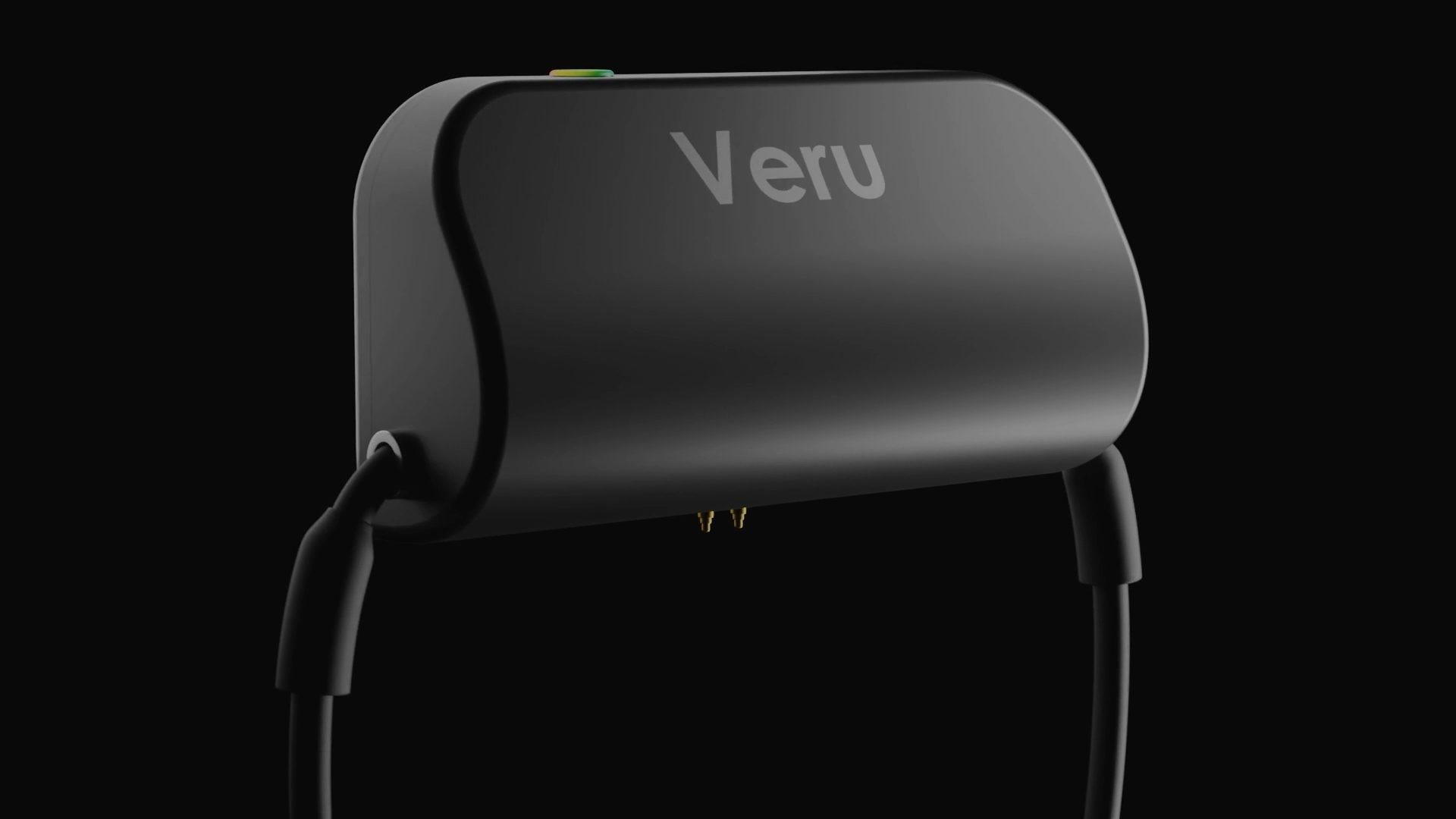
Use the email signup form below this page for launch updates and availability notifications.